Garlic Sauce (Lebanese Toum)
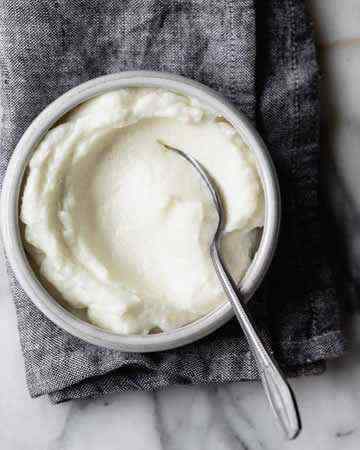 Whenever we order delivery from our favourite Lebanese place, the center of the meal isn't the chicken shawarma or the mixed grill for two - it's the potent garlic sauce, toum. Despite my desperate messages for extra toum, they never pack more than three two-ounce containers of the stuff. Thankfully, toum is pretty easy to make and stays fresh in the fridge for a month, so there's no reason to not always have a surplus. Ever since realizing this, I've been able to focus on more important things during dinner-like constructing the perfect bite of shish tawook, charred onion, and pickles on my fork. Toum is a staple of Lebanese cuisine, and more than just another condiment. This garlic sauce is great for stirring into soups and pasta, marinating chicken, and tossing with roasted vegetables; it adds an energetic punch of garlic to anything without requiring the hassle of peeling and mincing. It's also a pungent vegan alternative to mayo and perks up any sandwich. Toum has become a staple in my fridge, and since it requires only four ingredients and a food processor to make, there's nothing stopping you from also living beyond the limits of a few two-ounce containers.
What Is Toum?
Toum is essentially a mayonnaise, but it's stabilized with garlic instead of egg. Just like mayo, toum is an emulsion of oil into water, made possible with the help of a third-party emulsifier.
An emulsion always involves two incompatible liquids brought together by dispersing one into tiny droplets suspended throughout the other. This can be done with vigorous shaking and agitation-like when you're whisking oil into a vinaigrette-but without an emulsifier, the coupling is only temporary. Emulsifiers and stabilizers help droplets stay dispersed by coating each one and reducing the surface tension, preventing them from coalescing.
Mayo is a stable emulsion because the lecithin and proteins in an egg are some of the most powerful emulsifiers around. One egg is capable of emulsifying one gallon of oil, resulting in a stiff and spreadable sauce. A properly made toum will be just as thick, and densely packed with billions of oil droplets, but it's all held together with the far less stable proteins and pulverized plant tissues of garlic. This makes bringing toum together a more delicate process than making mayo, but with some patience, you can avoid pitfalls.
This first step is to make a smooth and fluffy garlic paste. For the most flavourful toum, start with the freshest garlic: Pre-peeled cloves sold in bulk lose much of their pungency, while old, sprouting heads of garlic can be bitter and harsh. Look for firm, tight heads with no signs of bruising or sprouting.
After peeling the cloves, I split them in half lengthwise and remove the germ, as the little sprout in the center can leave a noticeable sharpness in raw applications. (Read my article on removing the garlic germ for a more in-depth explanation.)
Process the cloves in a food processor, along with kosher salt for added friction, until completely puréed. The garlic needs to be fully broken down in order for the proteins and stabilizers to be released from within its cell walls.
Once the garlic is smooth, blend in some lemon juice, freshly squeezed. With mayo, all of the liquid can be added at the start because the egg is such a strong emulsifier. Because garlic is a weaker emulsifier, keeping the paste thick creates more drag on the oil droplets, helping to keep them apart.
Next, add oil very slowly, in a thin stream. Adding the oil too quickly will flip the emulsion inside out, dispersing water droplets into the oil and resulting in a greasy sauce, so it's important to take it slow.
After adding each half cup of oil, add spoonfuls of lemon juice and water. This prevents breaking the emulsion by not overcrowding the liquid phase with too many droplets of oil. Alternating oil and water will yield a fluffy, thick, and stable garlic sauce. Add more oil for a thicker and milder spread or garlic dip, less for a more pungent and free-flowing sauce.
How to Fix Toum When It Breaks:
Sometimes, even when you've delicately drizzled in oil and patiently made your garlic paste, this fussy sauce still breaks-perhaps because the food processor overheated the toum, or the garlic was old and dry. Don't worry, you can harness the emulsifying powers of an egg white to bring it back together. Combine one egg white with a quarter cup of the broken emulsion and process until fluffy before slowly pouring in the rest. Although this won't be a traditional toum, it will be delicious and creamy.
Stocked with homemade toum, you'll never be left to suffer the whims of miserly takeout portions or greedy partners again.
1 cup cloves garlic (4½ oz; 130 g)
1 tsp. sea salt
¼ cup lemon juice, freshly squeezed, divided (60 g)
¼ cup water, ice cold, divided (60 g)
3 cups neutral oil, such as grapeseed or Canola oil, divided (600 g)
Using a paring knife, split each clove garlic in half lengthwise. With the tip of the knife, remove the germ from each clove garlic half.
Using a knife to de-germ garlic.
Food Processor Method:
Place the degermed garlic and kosher salt in the bowl of a food processor. Pulse garlic in short bursts until finely minced, occasionally removing the lid to scrape down the sides of the bowl with a flexible rubber spatula. Add 1 Tbsp. lemon juice and continue processing until a paste begins to form. Add another Tbsp. lemon juice and process until completely smooth and slightly fluffy.
With the food processor running, slowly drizzle in ½ cup oil in a very thin stream, followed by 1 Tbsp. lemon juice. Repeat with another ½ cup oil and remaining 1 Tbsp. lemon juice. Continue the process, alternating ½ cup oil and 1 Tbsp. water, until all the oil and water have been incorporated. Transfer toum to a container and store in the fridge for up to 1 month.
Mortar and Pestle Method:
Depending on the size of your mortar, you may need to make the recipe in smaller batches, halving or quartering the ingredient amounts. In the mortar, combine garlic and salt and grind until it becomes a smooth paste. Work oil into paste 1 tsp. at a time. After adding 1 Tbsp. oil, work in a few drops of lemon juice. Repeat until all the oil, lemon juice, and water have been incorporated.
Makes 1 quart or 32 servings.
Cook's Notes:
- For the ideal light and fluffy texture, stick with either the food processor or mortar-and-pestle method described here. Trying to make the toum in a blender or with an immersion blender will result in a thin and dense texture closer to that of a mayonnaise or dressing than traditional toum.
- If the emulsion breaks, it can easily be brought back together with the help of an egg white. Combine 1 egg white with ¼ cup of the broken emulsion in the bowl of a food processor until fluffy. With the food processor running, slowly pour in the remaining broken emulsion.
Make-Ahead and Storage: Toum may be refrigerated in an airtight container for up to 1 month.