Garlic Mayonnaise (French Le Grand Aïoli et Crudité)
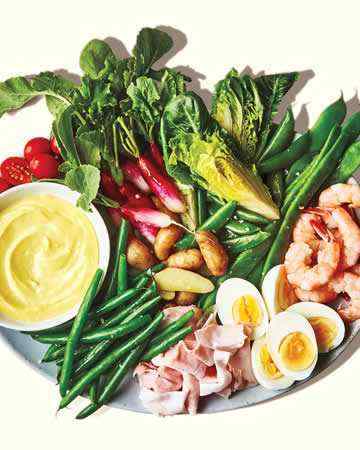 Aïoli is delicious, silky, garlicky French mayo that we should all be putting on everything, all the time. It's not just a condiment. It's the main event; so much so, that there's an entire family style dish named after it, that's eaten all over France in casual, leisurely gatherings. Everything can be made ahead of time for this abundant platter, and it's completely customizable. Swap in any veggies you love, add some cheeses or meats if that floats your boat; poached or marinated seafood is always welcome as well. Sometimes baguette is featured alongside, so go to town creating the platter of your dreams. This is kind of the main course that will keep guests going as they drink, and you can replenish throughout the evening. Aside from the aïoli, consider this recipe just a suggestion. Fill your Grand Aïoli platter with just about anything.
Aïoli:
2 egg yolks
2 Tbsp. Dijon mustard
2 large cloves garlic, finely grated
½ lemon juice, freshly squeezed
2 cups Canola oil
1 pinch sea salt
For the Aïoli:
Using a whisk, incorporate the oil, about 2 tsp. at a time, whisking constantly and vigorously to emulsify. Do not add the oil too quickly or the mixture will break, and you'll have to start over. Only add more oil when the last addition is fully incorporated.
Keep adding oil and whisking until everything has been incorporated. At this point add the salt and lemon juice to taste. Adjust the seasoning as needed, and transfer to a container to store in the fridge while you prepare the other components. Fresh mayo like this will keep for about 4 days in the fridge, so feel free to make it ahead.
For the Platter:
You'll want roughly 4 lbs combined of food for this platter; you won't put it all out at once, but have it prepped so you can replenish and refresh as the evening goes on. A few suggestions:
blanched fingerling potatoes
fresh cherry tomatoes
blanched multi-colour carrots
blanched large asparagus
sturdy leaves such as radicchio, endive or little gem lettuce cut into wedges
poached, chilled shrimp
breakfast radishes
assorted charcuterie
1 dozen eggs, hard-boiled, peeled and sliced lengthwise
Tips on Blanching Vegetables:
Blanching vegetables takes the rawness out of them, gives them a little tenderness, holds their bright colour and adds flavour thanks to very salty water. I like to blanch in the largest pot I have, giving the vegetables plenty of room to circulate in lots of water. I go HEAVY on the salt. In general, eyeball about 1 cup of kosher salt to 1 gallon of water. Of course, you can adjust to your tastes a bit, but no need to be shy. This gives the plain veggies tons of flavour.
The secret to preserving the colour and texture of your blanched veggies is the ice bath. This cold shock is key to lock it all in. I keep the largest bowl I have next to the stove filled with lots of ice and cold water. As the veggies come out of the boiling water, they get plunged immediately into this ice bath to cool.
Blanching time varies depending on the vegetable and its size. Things like asparagus and thin carrots take only two minutes or so, whereas small potatoes will take about 15-20 minutes. Use a fork to test for doneness as they boil.
Only blanch one type of vegetable at a time, but feel free to use the same pot of boiling water for the whole process. Make sure the water is always at a rolling boil before adding the next round. Have tongs and a slotted spoon on hand to remove the veggies as they're done and get them right into the ice bath.
Once cooled, I like to arrange everything by variety on a paper towel lined sheet pan. It makes the assembly and replenishing of the grand aïoli easy and fun.
To assemble, just get creative. There are no rules here. I usually put out about 1 cup of the aïoli at a time, surrounded by the abundant array of things to dip, and just replenish as needed to keep it fresh.