Harissa (Tunisian)
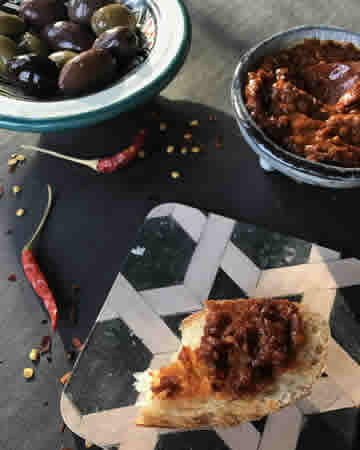 If there is one ingredient that is quintessentially Tunisian, it has to be harissa. {Aside: Let’s settle this once and for all. Harissa is a Tunisian condiment, despite the way it's typically marketed in the United States. Moroccans have their amlou (which is delicious in its own right, if you haven’t tried it) but harissa is trademark Tunisian. While it’s hard to imagine Italian food without tomatoes, Irish food without potatoes, or Tunisian food without chiles, these cuisines were absent of amazing flavours until Europeans brought them back from the Americas. While well-known harissa producers like Cap Bon are more than adequate (and there's a few half-empty tubes sitting in our fridge as we write this), there's nothing quite like homemade harissa and we have a basic recipe to share with you today.
½ cup vegetable or extra-virgin olive oil
1 (6 oz) can tomato paste
12 oz red pepper flakes
9 oz water
1 Tbsp. sea salt
1 tsp. cumin powder
1 tsp. caraway powder
4 cloves garlic, peeled
1 Tbsp. vinegar
¼ cup olive oil, to finish
Place a small sauce pan with the oil on low heat.
Add tomato paste and lightly sauté for a few minutes until red color is released into the oil and it becomes fragrant.
*Note: Sauteing the tomato paste is to cook out the raw flavour, you do not want any browning.
Add red pepper flakes and stir into the tomato paste and oil.
Add water and stir.
Add cumin powder, caraway powder, salt. Press two of the garlic cloves and add those as well.
Stir mixture and check thickness. It should not be runny or too thick, more water can be added in small increments to reach the perfect consistency.
Cover the pot and set on the lowest heat setting possible.
Let cook for 10-20 minutes or until the pepper flakes have all fully softened.
Remove from heat and let cool.
Add 1 Tbsp. vinegar and two more pressed garlic cloves.
To finish, add ¼ cup olive oil.
Cook's Notes:
- Usually harissa is served with olive oil poured on top, if you plan to use it this way you can lessen the amount of oil used at the end.
- There are many harissa recipes. Traditionally, it is made with a mortar and pestle, which is where its name originates.