Chicken Liver and Pork Paté with Apricots and Pistachios (French la Buvette Terrine)
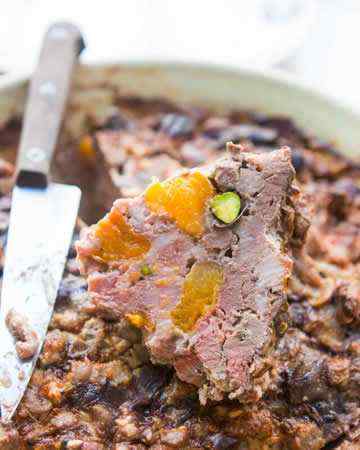 It amuses me when people talk about snooty people sitting around, leisurely eating pâté, because paté is rustic, country fare, not considered fancy in France. While pâté can have a pastry-type crust (pâté en croûte) and some are a little fancier than others, the cousins of paté, terrines, are truly down to earth. They can be baked in a special mold (you can come across them at French flea markets for around 5 bucks, like the one I used here), they can also be baked in any ovenproof bowl, which I did with this terrine. So there's no excuse not to sit around and eat paté, or terrine, all day. And not only is this one incredibly easy, it's also one of the best terrines I've ever had. La Buvette is a charming little bar à vin (wine bar) that, once word got out, became a hotspot for locals and visitors. I should correct that and say it's a bar à manger, because due to local laws, in order to drink there, you need to order something to eat.
If you've not made a terrine before, this one is extremely easy, and delicious. Don't let my wordiness put you off; I'm trying to be descriptive and give tips on the steps, but basically, you're mixing chopped meat with seasonings, then adding dried fruit and nuts, packing everything into a pan, and baking it. And that's it.
I hand-chopped the meat into pieces that were about ½" (1.5 cm), which was a tad time-consuming but you can ask your butcher to grind the meat coarsely for you. If you don't have a butcher, I've made it with regular ground pork but I recommend coarsely hand-chopping the fatback and livers, as the larger pieces of meat give the terrine an irregular look and are nice to have individual bites of. (Note: When I made it with regular ground pork, not coarsely ground, it threw off quite a bit of liquid during cooking. If that happens to you, just drain that off from the baking pan after its baked and cooled a bit.) Although you could ask the butcher to coarsely grind that too if you want to make it easier. Food processors don't do a great job of grinding meat like this, so I don't recommend using one. To make the meat easier to hand-chop, if going that route, cut the meat into relatively small pieces or strips and freeze them until firm, about 30 minutes. Working in batches, remove a few pieces of meat from the freezer, keeping the rest cold, and hand-chopping it with a chef's knife. To mix things up a bit, you could give it a go with dried figs or pitted prunes in place of the apricots and replace the cognac with Armagnac, Calvados, or another brandy.
12 oz chicken livers, trimmed of any sinew, cut into 1" (3 cm) pieces (340 g)
1 lb pork shoulder, boneless, cut into ½" (1.5 cm) pieces, or coarsely ground (450 g)
8 oz fatback or pork belly, skinless, cut into ½" (1.5 cm) pieces, or coarsely ground (225 g)
3 Tbsp. cognac or Armagnac, or another brandy
1 Tbsp. sea salt
1 tsp. black pepper, freshly ground
¼ tsp. pimente d'Espelette pepper, or sweet or smoked paprika
2/3 cup heavy cream (160 mL)
10 dried apricots, cut in half or quarters
¼ cup pistachios, shelled, preferably unsalted (50 g)
Mix together the pieces of chicken livers, pork shoulder, fatback or pork belly, Cognac, salt, black pepper and pimente d'Espelette in a large bowl. Cover and refrigerate for 12 hours, or overnight.
Preheat the oven to 375°F (190°C/170°C fan, Gas Mark 5). Have a 9x5" (23x18cm) rectangular loaf pan or terrine mold ready, or an ovenproof bowl that will hold close to 6-7 cups (1.5-1.7L) of mixture.
Place the pan or mold in a larger pan that you will use to create a water bath to bake the terrine in.
Mix the heavy cream, apricots and pistachios into the meat mixture. Transfer the mixture to the baking pan or mold, smooth the top and cover snugly with foil. Add hot water to the larger pan the terrine pan or mold is sitting in, so it's coming up halfway up the sides of the pan or mold. Bake for 35 minutes, then remove the foil and bake another 35 minutes, or longer, until the terrine is done.
(My terrine baked in a clay bowl took longer to bake than in the metal loaf pan I used the second time I made this; after removing the foil, mine in the bowl took an additional 65 minutes. If using a loaf pan or rectangular pâté or terrine mold, it should be done after removing the foil and baking it for the remaining 35 minutes.) You can verify the temperature with an instant-read thermometer, which should read 150-155°F (66-68°C) when done. The temperature of the terrine should continue to rise to 165°F (72°C), considered a safe temperature, after you take it out of the oven.)
If you don't have an instant-read thermometer, bake the terrine until the juices run clear when you poke a sharp knife down into the center.
Remove the terrine from the oven and the water bath and let cool on a wire rack completely. When cool, cover and refrigerate for at least 24 hours before slicing and serving.
Storage: The terrine will keep up to two weeks if well-wrapped and refrigerated. Many say terrines improve with age and I agree that they do get better a few days after they are made. I've not tried freezing this terrine but terrines and pâtés don't taste as good if they've been frozen, but you could freeze it if you must. You might think this makes a lot, but trust me, you'll go through it faster than you think.