Angel Food Cakes
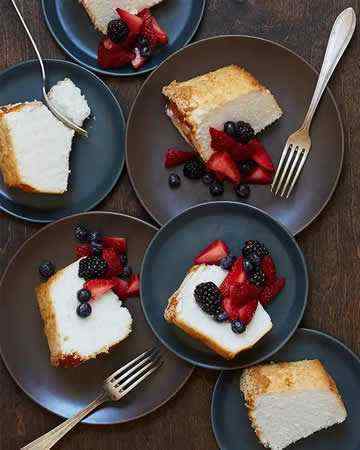 Angel cake, also known as angel food cake, originated in North America and debuted during the late 19th century. It's often considered a product of the Industrial Revolution, thanks to the mass production of wire whisks and the popularization of baking tubes. It was a way for people to use the many egg whites left over after the yolks had been used to make noodles or pastry creams. The texture of an angel cake is its most defining characteristic - light, fluffy and airy. The crumb is very fine and it often has a subtle sweetness to it.
Cultural Significance: In the US and Canada, angel food cake has become a staple for many celebrations - especially birthdays - and is very popular during spring and summer.
Baking Pan: It requires a specific tube pan, usually ungreased, to ensure the batter clings to the side, aiding its rise. The egg whites are beaten until stiff peaks form, then combined gently with the other ingredients to ensure the air isn't knocked out.
Nutritional Value: Given its fat-free nature, angel cake tends to have fewer calories than many other traditional cakes. The primary source of its calories is sugar and the egg whites. It's a popular choice among those who are mindful of their fat intake or are seeking a slightly "lighter" dessert option.