Dacquoise with Hazelnuts (French)
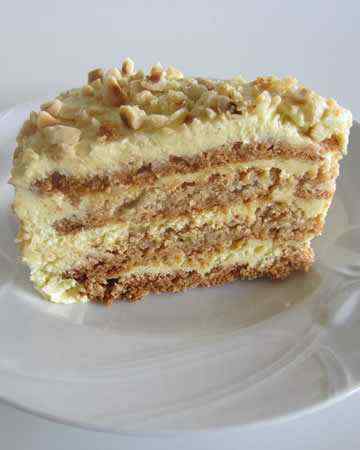 This cake is made with layers of almond or hazelnut meringue and whipped cream or French buttercream. The term can also refer to the meringue layers themselves instead of the finished cake, and they can be combined with a variety of fillings and toppings. The meringue is made with ground or finely chopped almonds or hazelnuts that are folded into beaten egg whites before baking. The recipe for dacquoise can be used in a wide range of desserts, and it can serve as a base for anything from macarons and individual cakes to pavlovas. The cake itself can be filled with pastry cream, buttercream, ganache, whipped cream, fresh fruit, or preserves. The base recipe for dacquoise is incredibly versatile and can be customized by using different types of nut flours such as pistachio or coconut and adding different kinds of dried fruits or even chocolate. Some of the most famous combinations are rum and chocolate, lemon and strawberry, and banana and pecan - but feel free to experiment with any flavour combinations that might come to mind.
Originally from the south of France, dacquoise is a variation of meringue to which chopped nuts are added. Meringue itself originated in the early 1600s, but when exactly did dacquoise appear is unknown. What is known is that this cake became increasingly popular in England in the 1790s when many French chefs moved there and began serving French desserts to the English upper class. The cake is named after the historical area of Pays Dacquois, the area surrounding the town of Dax. A popular variation of dacquoise is the marjolaine cake, invented by French restaurateur and chef Fernand Point, which is filled with chocolate buttercream and cut into rectangular pieces.
Dacquoise:
9 oz roasted and peeled hazelnuts, finely chopped (250 g)
10½ caster sugar (250 g)
1 oz cornstarch (25 g)
6 large egg whites
pinch kosher salt
Chocolate Ganache:
5½ oz dark chocolate (about 36% cocoa solids) (150 g)
3¾ oz double cream (110 mL)
Custard Filling:
20 oz full-fat milk (600 mL)
3 large egg yolks, at room temperature
4½ oz caster sugar (125 g)
2 Tbsp. chicory and coffee essence (optional)
1¾ oz cornflour (50 g)
10 oz whipping cream (300 mL)
Praline:
1¾ oz caster sugar (50 g)
36 whole hazelnuts, blanched, skinned
½ tsp. lemon juice, freshly squeezed
Decoration:
3½ oz hazelnuts, toasted, chopped (100 g)
Position the oven racks in the upper, middle, and bottom part of the oven, then set the oven to preheat to 300°F (150°C/130°C fan, Gas Mark 2). Line three 21 cm round baking pans or trays with parchment paper or, if you are using trays, draw a 21 cm diameter circle on each. Set aside.
In a small bowl combine hazelnuts, 100 g of caster sugar, and cornflour. Whisk egg whites with a pinch of salt at medium speed for 2 minutes. Increase the speed to high, and with the mixer running, gradually add 200 g of sugar until stiff glossy peaks. Fold the hazelnut mixture into the meringue.
Spoon the meringue into a piping bag fitted with a 1.5 cm plain tube. Pipe a spiral of meringue starting from the center of each drawn circle and working outwards.
Bake for an hour, rotating the upper and bottom baking tray after 30 minutes, so they cook evenly. Turn off, and leave the meringues to cool down in the oven with the door slightly open.
Make the Chocolate Ganache:
Place the chopped chocolate in a heatproof bowl. Heat the cream until hot, just simmering, but not boiling and pour over the chocolate. Let sit for a minute and then stir until smooth. Cool to room temperature, then refrigerate until it thickens. Fill the piping bag fitted with a medium star nozzle with ganache and set aside.
Make the Custard:
Bring the milk to a boil over low heat. Whisk the egg yolks, vanilla and sugar, and coffee and chicory essence, then whisk in the cornflour, a Tbsp. at a time. Pour the hot milk over the egg mixture, whisking continuously, then pour the mixture back into the pan. While constantly whisking, bring to a boil, then decrease the heat, and let it simmer for 2-3 minutes until thick and smooth. Remove from the stovetop and wait an hour for it to cool. Once the custard is chilled, fold in softly whipped cream.
Whip the cream until soft peaks. Whisk half of the whipped cream into the cold coffee mixture, then gently fold in the rest. Cover and chill until needed.
Melt sugar in a small frying pan (without stirring). Cook until golden caramel colour, or until a thermometer registers 300°F. At that point add the whole hazelnuts and lemon juice, and stir with a wooden spoon until well blended. Pour the mixture onto a baking tray lined either with baking paper or silicone. Using two tsp. form 12 pieces of hazelnut praline. Wait for it to cool completely before use.
Assembly:
Position one meringue layer on a large serving plate, then in an even layer, coat it with one-third of the coffee cream. Place a second meringue layer on the cream to cover, then spread the top part with half of the coffee cream. Top with the third meringue layer, coat the sides of the cake with the coffee cream.
Press roasted and chopped nuts into the sides of the cake. Pipe 12 swirls of the ganache onto the top outer edge of the cake, taking care they are evenly spaced, then place a piece of praline on each.
Makes 8-10 servings.
Cook's Notes:
- Caster Sugar: Caster sugar, often spelled castor sugar, is a term that is used in Britain, but most of us here in North America have never heard of it. It is actually just "superfine" granulated sugar. This kind of sugar is often called for in baking and it will dissolve even in cold drinks. In Canada, caster sugar is known as 'berry sugar'. If you are in Canada, you may be able to find Roger's Berry Sugar in your grocery store. Otherwise, caster sugar is easily available on Amazon.
- Equipment: You will need a piping bag to help you create even meringue layers, either rounds or rectangles. Also, draw the desired shape onto parchment paper as a guideline before you start piping. Other pieces of equipment you will need is a whisk if you're making a custard, and a candy thermometer if you're making pralines.
- Variations: The base recipe for dacquoise is incredibly versatile and can be customized by using different types of nut flours such as pistachio or coconut and adding different kinds of dried fruits or even chocolate. You can try adding chopped nuts to the batter, such as pecans or macadamia nuts for an extra layer of flavour. Most common flavour combinations are rum and chocolate, lemon and strawberry, and banana and pecan, so feel free and swap the ingredients in the base recipe to suit your taste.