Charlotte with Bavarian Cream (French Charlotte Russe)
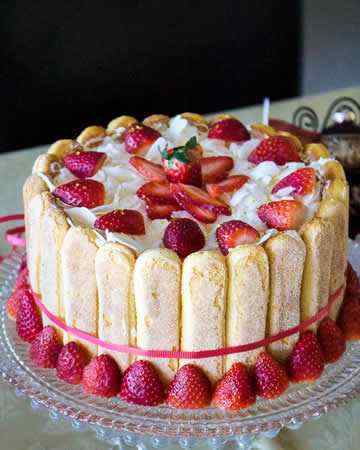 During this Bicentennial year, many of the great desserts of old are being rediscovered and enjoyed - luxurious offerings like Charlotte Russe. According to culinary historians, that great French chef, Antoine Carême, while on the staff of England’s George IV (1820-1830), created the first Charlotte, a handsome apple pastry that he named Apple Charlotte, in honour of the king’s daughter, Princess Charlotte. It is said that later, while on the imperial staff of Russia’s Czar Alexander I, Carême concocted a sister dessert - a custardy mixture, circled with a crown of ladyfingers - which he called Charlotte Russe. Apocryphal or not, it is believed that Carême was nostalgic for London and the elegance of the English court, and so the name. Others discount this theory, saying that the Charlotte Russe was so named because it resembled the French "Charlotte" hat of the era. Today, Charlottes are made with all kinds of creams and Bavarians. Numerous flavourings are also added - nuts and chocolate, citron, chestnuts, jams. Some are circled with ladyfingers, buttered bread, cake slices and so on. They come to the table sauced in a variety of ways. This Charlotte Russe is a cake made of lady fingers pressed into an elegant mold, filled with Bavarian cream, and flavoured with rum or brandy. This is a no bake dessert perfect during the hot summer months.
Base:
30-35 lady fingers
Syrup:
¾ cup granulated sugar
¾ cup water
1 tsp. dark rum or brandy
Bavarian Cream:
1 cup sugar (200 g)
2 large eggs
1 cup whole milk (200 mL)
1 tsp. pure vanilla extract
2 env gelatin (15 g)
2 Tbsp. water
2¼ cups heavy cream (500 mL)
½ cup candied fruit (100 g)
Decorations:
strawberries, oranges, blueberries, raspberries, cherries, peaches
Prepare the Syrup:
Bring to a boil the water mixed with sugar and simmer for 2-3 minutes.
Remove from the stove and flavour the syrup with rum (do not add the rum while simmering the syrup as the flavour will dissipate).
Let the syrup cool down. If you add ladyfingers to a hot syrup, they will fall apart.
Make the Base:
You will need an 8" springform cake pan.
Steep the lady fingers in the syrup and line the sides of the springform with them. Place them tightly together. You will probably need 20-25 lady fingers.
Line the bottom of the springform with lady fingers that you steeped in the syrup.
Make the Whipped Cream: Place mixer bowl and whisk in freezer for at least 20 minutes to chill.
Pour heavy whipping cream and vanilla into the cold bowl and whisk on high speed until medium to stiff peaks form, about 1 minute. Do not over beat. Set aside.
Make the Bavarian Cream:
Start by hydrating the gelatin. Mix gelatin with water in a little bowl and set aside.
In a medium pot mix the eggs with the sugar. Add milk.
Place the pot on Bain-Marie and stir constantly until the first signs of boiling. At this point the eggs are cooked enough and the custard should cling to the spoon. Remove and add the hydrated gelatin. Mix continuously with a wooden spoon until the mixture is completely cool.
Add the whipped cream and blend them together.
Add the candied fruit and mix well.
Assemble the Cake:
Pour half the filling on the bottom of the cake, over the lady fingers.
Cover the filling with another layer of lady fingers soaked in the syrup.
Pour the rest of the filling over the lady fingers and smooth the surface with a cake spatula. Place it in the refrigerator for few hours or better overnight.
Next day, carefully remove the edges of the springform and place the cake on a platter. Decorate it to your taste with fruits, more whipped cream, etc. It is also customary to tie a ribbon around the sides just in case it sits out too long and the cream starts to melt.