Any Fruit Upside-Down Cake
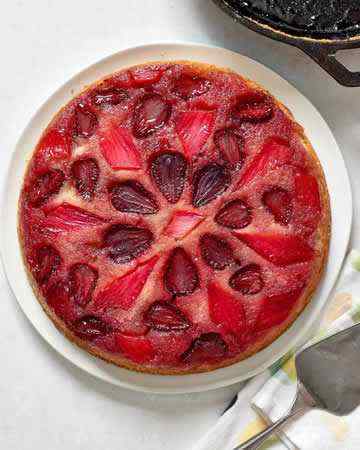 Developed sometime around the turn of the last century, when canned pineapple was invented, the pineapple upside-down cake is a classic American cake that has probably passed the peak of its popularity. It’s true that tastes have changed over the last 100 years and things like canned pineapple and maraschino cherries aren’t as popular they once were, but the upside-down cake, with its buttery brown sugar glaze balanced by the simple white cake below, still holds a lot of appeal. These days, many people make the cake with pineapple, only they may use fresh fruit or leave off the maraschino cherries. Personally, my favourite way to reinvent this cake is to use fresh or frozen seasonal fruit and if I’m feeling really creative, some chopped fresh herbs.
Topping:
3 Tbsp. unsalted butter
½ cup Monk Fruit Sweetener with Erythritol (Granular)
2-3 cups fruit, sliced or chopped
3-4 Tbsp. fresh herbs, chopped, optional
Cake:
1½ cups all-purpose flour, unbleached
1 tsp. baking powder
¼ tsp. sea salt
½ cup (1 stick) unsalted butter, at room temperature
1 cup Monk Fruit Sweetener with Erythritol (Granular)
2 large eggs
½ cup whole milk
Preheat your oven to 350°F (180°C/160°C fan, Gas Mark 4).
If you are using fresh fruit, be sure it is washed and dried. Slice it into wedges or dice it into large 1" chunks. Most berries can be left whole and smaller stone fruit such as cherries and apricots can be halved. If using frozen fruit, do not defrost.
Place your baking pan or skillet on a burner over low heat and add the butter. Once the butter has melted, add the sugar and stir it gently.
Arrange the fruit in a single layer in the baking pan, being sure to crowd the pan as much as possible. The fruit will shrink a little when cooked. If using herbs, sprinkle them on top of the fruit.
In a medium mixing bowl, whisk together the flour, baking powder and salt. Set aside.
Combine the butter and sugar in a large mixing bowl. Using a hand mixer, cream the butter and sugar together until lightened and creamy, about 5 minutes. Add the eggs and mix until smooth, an additional minute of mixing.
With the mixer on low speed, add the flour mixture in three batches, alternating with the milk, like this: Add ⅓ of the flour mixture and mix until incorporated about 30 seconds. Add half of the milk, mixing until smooth, about 30 seconds. Add half of the remaining flour, mixing again for about 30 seconds, followed by the remaining milk and 30 seconds of mixing. Finally add the remaining flour and mix until completely smooth, about 1 minute total.
Dollop the fruit with the cake batter, being sure that it is evenly distributed. Smooth with a spatula.
Place the cake in the oven. You might want to put it on a baking sheet to catch any overflow (sometimes the fruit bubbles up). Bake for 40-45 minutes, or until the top of the cake is golden brown and a thin knife or toothpick inserted in the center comes out clean.
Remove the cake from the baking sheet and place it on a cooling rack. Let the cake settle for a minute, until any fruit that has leaked up the sides has stopped bubbling. Do not let the cake cool or you will not get it out of the pan. Run a knife around the edges of the cake. Place your cake plate over the cake and using oven mitts, carefully flip the cake over. Gently remove the cake pan. Be careful, as the fruit and glaze is still quite hot and will burn if touched.
If any pieces of fruit are stuck to the cake pan, gently scrape them up with a knife and replace them on the cake. Let the cake cool.
Serve the cake at room temperature or slightly warm. Top with barely sweetened whipped cream if desired.
Makes 8-10 servings.
Cook's Notes:
- Storage: To store, wrap carefully in plastic wrap or store in an airtight container and keep for several days at room temperature.
- What Fruit Works for This Cake? This cake lends itself towards any fruit that cooks up well, which is any fruit you’d make a pie with. The cake pictured here is made with strawberries and rhubarb. Here are a few more of my favourites:
- Peaches
- Nectarines
- Cherries
- Berries
- Apples
- Pears
- Bananas
- Mangos
- Apricots
- Figs
- I suppose you could even use citrus like oranges, grapefruit and lemons, although I haven’t tried it so I can’t be certain. Plums are good if they’re not too ripe and juicy.
- Finely chopped herbs such as basil or lemon thyme are another more updated addition. Peaches and nectarines are great with basil and lemon thyme is delicious with just about anything. Mint would work with almost any fruit as well and rosemary would be perfect with figs. Spices such as cinnamon would be good for the fall versions of this cake when fresh apples, persimmons, or pears would be a natural choice.
- Can I Use Frozen Fruit? Fresh fruit is great, but frozen fruit works as well, so don’t hesitate to use it. The only thing you want to be careful about is not using fruit that has been stored in juice or syrup. You want unsweetened, individual pieces - and be sure that they are still frozen when adding them to the topping before baking, as they are easier to handle that way.
Nutritional Information:
Per serving: Calories 337 | Fat: 14.2 g | Saturated: 8.6 g | Carbs: 50.0 g | Fiber: 1.2 g | Sugars: 30.7 g | Protein: 4.0 g | Sodium: 118.9 mg