Silver Cake with Pink Buttercream
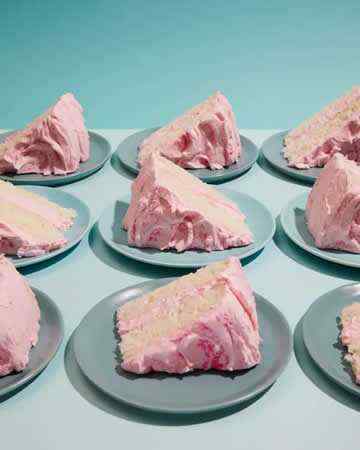 This early to mid-20th century white cake, is made with nary an egg yolk but with copious amounts of stiffly peaked egg whites. This cake is also known as; Silver Sea Foam Loaf, Penny-Wise Silver Cake, and Silver White Cake. This Silver Cake is a wonderful blank canvas, no matter the time of year or occasion, and if it doesn't make for the best birthday cake ever, I'm not sure what does.
Cake:
cooking spray or softened butter
2¼ cups cake flour, sifted
2 tsp. baking powder
½ tsp. baking soda
1 tsp. sea salt
½ cup vegetable shortening
¼ cup unsalted butter, at room temperature
2 tsp. pure vanilla extract
1½ cups granulated sugar
1 cup water, ice cold
4 large egg whites, stiffly beaten
Pink Buttercream:
1½ cups unsalted butter, at room temperature
½ tsp. sea salt
6 cups confectioners' sugar, sifted, divided
⅔ cup whole milk or heavy cream
4 tsp. pure vanilla extract
red food colouring (optional)
Decoration:
pink sanding sugar
Make the Cake:
Preheat the oven to 350°F (180°C/160°C fan, Gas Mark 4). Grease 2 (9x2") round cake pans with cooking spray or softened butter. Line the bottoms of the pans with parchment paper and grease the parchment.
In a medium bowl, whisk together the flour, baking powder, baking soda, and salt. In the bowl of a stand mixer fitted with the paddle attachment, beat the shortening, butter, and vanilla on medium to medium-high speed until fluffy and light, 2-3 minutes, scraping down the bowl with a rubber spatula as needed. Add the granulated sugar and continue beating for another 3-5 minutes, until the mixture doubles in volume.
Decrease the speed to low and add the dry ingredients in three additions, alternating with two additions of the water, scraping down the bowl as needed with a rubber spatula. Stop the mixer when there are still streaks of flour in the batter. Finish mixing by hand, adding the egg whites in three stages, and folding them in with a rubber spatula.
Transfer the batter to the prepared pans and bake for 20-25 minutes, rotating at the halfway point. The cakes are ready when a cake tester comes out with a few moist crumbs and the cake has just started to come away from the sides of the pan. Let cool for about 20 minutes, and invert the cakes right-side up onto cooling racks. Let the cakes cool to room temperature.
Make the Buttercream:
In the cleaned bowl of the stand mixer fitted with the paddle attachment, beat the butter on medium speed until smooth and soft. On low speed, slowly add the salt and 2 cups of the confectioners' sugar, scraping the bowl periodically with a rubber spatula. Add one-fourth of the milk and mix until incorporated. Continue mixing in this manner, adding the remaining confectioners' sugar and milk, until the frosting is fluffy and spreadable.
Add the vanilla and a few drops of food colouring, if using, and continue mixing on medium-low to medium speed for at least 5 minutes, until fluffy and stable. A longer mixing time results in exceptionally light frosting.
Generously frost the cooled cake layers with the buttercream, using an offset spatula or butter knife. If you do not want a thickly frosted cake, you will have leftover frosting. Sprinkle sanding sugar on top of the first frosted layer, before placing the second on top of it, and on the top and sides of the frosted cake once you are done. Slice the cake using a long serrated knife.
Makes 16 servings.
Cook's Notes:
Make Ahead: The cakes can be tightly wrapped in plastic wrap and stored on the counter for up to 1 day. The frosting will keep on the counter in an airtight container for up to 1 day, but may need to be re-whipped in a stand mixer before using.
Storage: The cake will keep, lightly covered in plastic wrap, on the counter for up to 3 days.