Custard Cream (French Crème Plombières)
 Crème Plombières is an ice cream dessert made with custard cream enriched with candied fruit and whipped cream and served chilled either as it is or in pastry shell or spooned over sponge cake.
The origin of plombières ice cream is disputed. It is unclear whether its name refers to the commune of Plombières-les-Bains. A folk etymology suggests that the dish was first served to Napoleon III at the signing of the Treaty of Plombières in 1858; but Marie-Antoine Carême provided a recipe for "plombière cream" in his 1815 book, Pâtissier royal parisien. Similar recipes can be found in other French cookbooks from the 19th century. According to Pierre Lacam in 1893, "plombière cream" takes its name from a utensil used to make it. A similar etymological theory was proposed by Joseph Favre in his book Dictionnaire universel de cuisine, which says that "plombière is a synonym for bombe, which is used to grind the ingredients of the dish". Other scholars have suggested that the dessert takes its name from the mold in which the cream is pressed. Plombières ice cream is mentioned in Splendeurs et misères des courtisanes, published in 1844 by Honoré de Balzac. Plombières should not be confused with Malaga ice cream, a vanilla ice cream served with dried raisins soaked in Malaga wine or rum.
7 oz candied fruit mix, roughly chopped (200 g)
2 oz Kirsch liqueur (55 mL)
48 oz whipping cream (1.5 L)
8 oz whole milk (250 mL)
10 egg yolks
7 oz sugar (200 g)
1 tsp. pure almond extract ()
8 oz apricot jam (250 g)
Soak the candied fruits in the Kirsch for a couple of hours. Place a bowl in the fridge in preparation for whipping the cream.
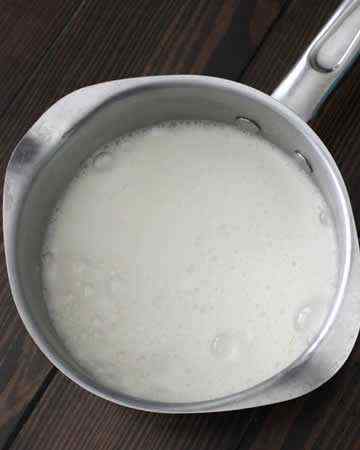
Whisk together the egg yolks with the sugar in a large saucepan until pale and creamy. Gradually whisk in 1 L of the cream and the milk over a moderate heat. Whisk constantly until the custard coats the spoon.
Remove from the heat, add the almond extract and candied fruits with the Kirsch. Leave to cool, stirring from time to time.
When the custard is completely cooled, whip the remaining 500 mL of cream in the chilled bowl until it forms soft peaks.
Fold into the custard then pour into silicone moulds. (Here, I used 12 briochette moulds.) Freeze until firm.
When ready to serve, gently heat the jam in a small saucepan. I If you prefer it smooth, strain the bits. Turn out the ice creams directly on to dessert plates.