Pastry Cream with Gelatin (French Crème Chiboust)
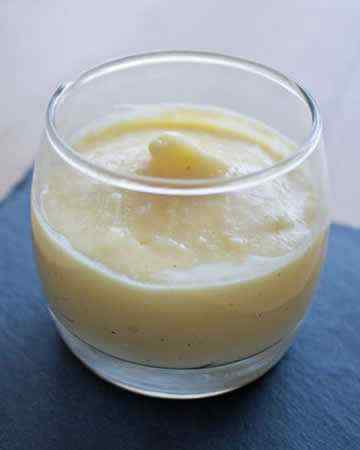 Crème Chiboust is just a combination of pastry cream with gelatin and Italian meringue. The result is very light and can be used to fill and decorate cakes, but also baked tarts. If the tarts need to be baked with the cream, there is no need to use gelatin. In the romantic setting of 19th century Paris, Monsieur Chiboust, a pastry chef with his own shop on rue Saint-Honoré, created the famous crème Chiboust. Well, he also created the famous Gâteau Saint-Honoré with crème Chiboust. The preparation is quite particular because the pastry cream must be kept warm until the meringue is fully incorporated. This might pose some concerns in terms of food safety (a temperature between 30-60°C is an ideal condition for bacterial multiplication), so make sure to cover the cream while resting at room temperature, or even keep it on a bain marie. The cream is a perfect filling for cakes and pastries, but can be served plain and chilled on its own as well. Mixed with fruit, it becomes crème plombières, and the version used with whipped cream is used traditionally as a millefeuille cream. Another known use is for soufflé fillings, as long as egg whites are the base, the mix will "puff up" and provide a creamy soufflé. So you can see why theis cream is so versatile.
2 sheets gelatine
4 medium eggs, seperated
9 oz milk (250 mL)
caster sugar, divided (175 g)
2 Tbsp. cornflour/cornstarch
1 tsp. vanilla paste
Place two sheets of gelatine in a bowl of cold water and allow to soak for about 10 minutes
Whisk together 4 egg yolks, 50 g (2 oz) caster sugar and cornflour until blended.
Heat milk until it just comes to the boil, then slowly beat into the egg yolk mixture. Return to the pan and cook over a low heat whisking constantly until thickened.
Pour the thickened custard into a bowl. Stir in the vanilla paste. Remove the gelatine from the water and squeeze out the excess water. Add to the hot custard and whisk together until the gelatine has dissolved. Cover with a sheet of dampened parchment paper and allow to cool.
Meanwhile, place 125 g (4 oz) caster sugar in a saucepan with 4 Tbsp. water. Heat gently stirring until the sugar has dissolved then increase the heat and heat until the syrup reaches to 121°C (25°F).
While the sugar syrup is coming to temperature, whisk egg whites until very frothy.
As soon as the sugar syrup reached the correct temperature, carefully pour the hot syrup in a steady stream down the side of the mixing bowl, while whisking on high speed. Once all the syrup has been added, continue whisking the egg whites until they cool down to room temperature and you have a very stiff and glossy meringue.
Stir the cooled crème patisserie to loosen slightly then mix in about one-third of the meringue. Then add the crème patisserie mixture to the remaining meringue and mix in.
Cook's Notes:
When whisking the egg whites until frothy, if you have a stand mixer you can leave the whisk running on low speed until the syrup is the correct temperature. If you don't have a stand mixer, stop whisking once the egg whites are very frothy, they will be fione for the few minutes it takes to make the syrup.
Take care adding the syrup not to pour on the whisk to avoid splashing as the syrup will be very hot.