Pavlova (Australia)
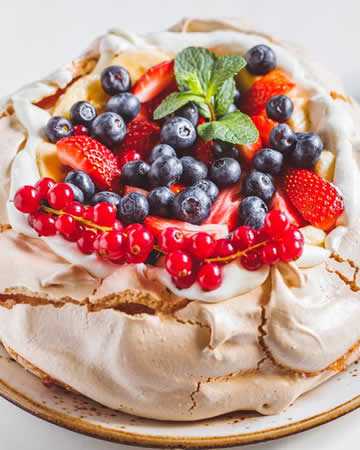 Delicate as the ballerina it was named after, Pavlova is the quintessential summer dessert. Whipped cream is typically dolloped on top of a snowy meringue, followed by a pop of colour in the form of fruit, preferably the tart varieties which contrast the sweetness of the meringue. Research suggests Pavlova is a descendant of the German torte and was invented in the 1920s during Anna Pavlova's tour of Australia and New Zealand, although the exact inventor is still debated. The first recipe for Pavlova appeared in print in 1926, although it was not the dessert we know today, but was instead a multi-coloured gelatine dish.When preparing a Pavlova recipe, the most important thing is to have scrupulously clean utensils, free of grease, egg yolks, or eggshells. In fact, the success of the meringue depends on it. Also important is that the egg whites are at room temperature before beating them to get more volume. Pavlovas have a habit of deflating and forming cracks when you open the oven but don't be disheartened. Just make some extra whipped cream to fill in the hole if this happens. It will still be a spectacular dessert. If you use bananas in the topping, toss them in lemon juice to stop them from oxidizing or turning brown.
Meringue Shell:
4 large egg whites, at room temperature
1 cup castor sugar (also known as caster sugar, berry sugar, or superfine sugar)
½ Tbsp. cornstarch
1 tsp. white vinegar
1 tsp. pure vanilla extract
Whipped Cream:
½ cup whipping cream
½ tsp. pure vanilla extract
½ cup icing sugar (confectioners' sugar)
Fruit Garnish:
2 cups whole berries or sliced fresh fruit of choice (strawberries, kiwi fruit, passion fruit, bananas)
1 Tbsp. lemon juice, freshly squeezed (optional)
fresh mint sprigs (optional)
While there are multiple steps to this recipe, this Pavlova dessert is broken down into workable categories to help you better plan for baking and assembly.
Preheat the oven to 275°F (140°C) and place the rack in the middle of the oven.
Make the Meringue Shell:
Line a baking tray with aluminum foil and score a 7" circle on the foil with the blunt edge of a knife, without tearing the foil. (Use a bowl as a guide.) Set aside.
In a clean, medium-sized metal bowl, beat the egg whites with a clean electric mixer on medium speed until the whites form soft peaks.
Gently sprinkle the sugar into the egg whites, 1 tsp. at a time, beating continuously until the whites form stiff glossy peaks.
Sprinkle the cornstarch and vinegar on the meringue and fold in gently with a plastic spatula.
Add the vanilla and gently fold the mixture again.
Now gently spread the meringue in the circle on the foil to make a circular base. Make sure the edges of the meringue are slightly higher than the center so you have a shallow well in the middle.
Bake the meringue for about 1 hour and 15 minutes or until it turns a very pale, pinkish eggshell color.
Turn off the oven and leave the door slightly ajar to let the meringue cool completely. As the meringue cools, it will crack slightly.
Just before serving, take the meringue out of the oven and gently transfer it from the foil to a plate.
Make the Whipped Cream:
Whip the cream with the vanilla and icing sugar until it forms peaks and set aside.
Prepare the Fruit:
Prepare the fruit by washing it and slicing any that aren't going to be left whole.
If using bananas, toss with the lemon juice to prevent browning.
Assemble the Pavlova:
Gently spread the cream over the top of the cooled meringue with a spatula.
Arrange the fruit on top. Garnish with fresh mint, if desired.
Serve immediately and enjoy.
Makes 4 servings.
Cook's Notes:
- When preparing the meringue shell, make sure to use the whipped egg whites immediately to form the pavlova base. If the egg whites sit, they will begin to deflate and make for a less airy meringue.
- You can make the meringue base ahead of time. Wrap tightly in plastic wrap or place in an airtight container and store at room temperature for several days. Keep in mind that if the weather is humid, the meringue will become soft and chewy.
- What's the Difference Between Pavlova and Meringue?
Although both are made with whipped egg whites and sugar, a pavlova includes additional ingredients, like cornstarch and white vinegar, that create a marshmallow-like center.