Avocados
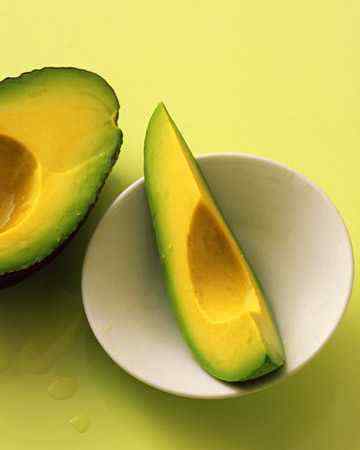 There are many domestic varieties of avocados, but the most common is 'Hass,' grown primarily in California. It is covered with a pebbly, leathery skin, which changes from dark green to deep purple (almost black) as the fruit ripens. Other varieties include 'Bacon,' 'Fuerte,' 'Gwen,' 'MacArthur,' 'Pinkerton,' 'Reed,' and 'Zutano.'
Nutrition: About 75% of an avocado's calories come from fat, most of which is monounsaturated fat. Healthy monounsaturated fats that can help lower cholesterol levels when eaten instead of harmful saturated fats. For a heart-healthy boost, replace butter with avocado on your favourite sandwich. Avocados have 35% more potassium (485 mg) than bananas (358 mg). They are rich in B vitamins, as well as vitamin E and vitamin K. Avocados have a high fiber content of 75% insoluble and 25% soluble fiber.
In Season: Avocados are available in the supermarket year-round.
What to Look For: Choose heavy, undamaged fruit. An avocado that yields slightly to pressure is best for slicing and dicing; if pressure leaves a small indentation, the avocado is best mashed.
Avoid very soft avocados, as they will be overripe and unusable.
How to Store: Keep unripe avocados at room temperature. To speed ripening, place in a paper bag with an apple or banana; to stop ripening, refrigerate for up to two days.
Did you know? Babies love avocados. Their soft, creamy texture makes them easy to eat, and their high fat content helps with normal infant growth and development.