Dates
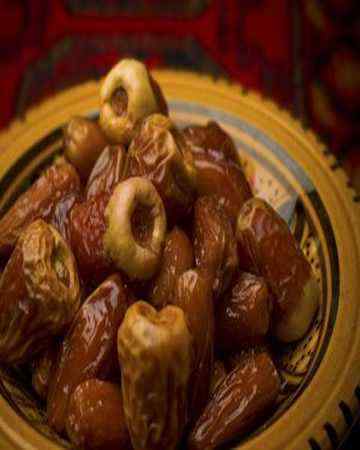 The date — the small, oblong fruit of the date palm tree — is intensely sweet. Its sugary concentration of flavor is akin to dried fruit. In fact, sometimes dates are dried, but usually you will find them most tasty fresh.
Nutrition: Dates are fat free, saturated fat free, cholesterol free, sodium free, and a good source of fiber (¼ cup provides 12% of the daily value for fiber). Dates also provide 8% of your daily potassium recommendation and 6% of your daily manganese recommendation in a ¼ cup.
Antioxidant Quality of Dates: Polyphenols are a type of antioxidant. According to the U.S. Department of Agriculture (USDA), dates are higher in total polyphenols than any of the most commonly consumed fruits or vegetables. The reason for this is due to a harsh desert environment (where dates are grown), which causes polyphenols to provide protection from oxidative stress to the palm’s fruit.
What To Look For: Choose dates that are shiny, uniformly colored and not broken.
How to Store: Store dates at room temperature in an airtight container for several months or refrigerate for up to a year.
Did You Know? Dates are the lowest moisture whole fruit with only 30% moisture. This makes them the only naturally “dehydrated” fruit. They have a long shelf life and do not require refrigeration. Dates have a natural balance of many minerals such as calcium, magnesium, zinc, copper, iron, selenium, and potassium. These minerals work in harmony to lower blood pressure on a daily basis.