Pistachio Flour
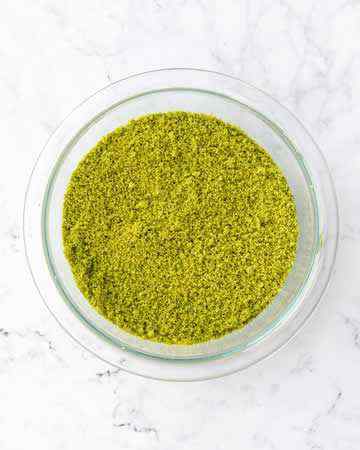 Pistachio flour provides a nutty flavour and lovely green colour in cakes, cookies, and other baked goods and desserts. Making it from scratch is easier than you’d think: all you need are fresh pistachios (and a little bit of time and patience). Pistachio flour is basically just very finely ground pistachio nuts (sometimes it’s called pistachio meal). You can use pistachio flour in baked goods the same way you would almond flour (and can easily substitute it 1:1 in any recipe that calls for almond flour, like amaretti cookies or macarons).
1¼ cups raw shelled pistachios (150 g)
Prepare Pistachios:
If your pistachios still have their skins, and you want a brighter green colour, blanch in boiling water for 30 seconds then transfer to an ice bath briefly before draining and peeling. Spread out on a baking tray and let dry overnight, or in a 250ºF oven for 30 minutes to remove any remaining moisture, taking care not to let the nuts get brown. Let cool completely before grinding. (If you're using prepeeled, slivered pistachios, or if you don't care about having brownish specks in your pistachio flour, you can skip this step).
Working in small batches, pulse pistachios in a food processor or clean coffee grinder. Give it 2-3 brief pulses, don't overdo it or the pistachios will warm and start to release their oils (which means they are on their way to becoming pistachio butter). Once they get oily, there's no fixing it, unfortunately.
Dump ground pistachios into a sifter or sieve, then sift over a bowl. The fine flour will fall into the bowl and you'll be left with a sifter full of the larger pieces.
Transfer these larger bits back into your grinder, adding more nuts if you have more to grind. Repeat the process, pulsing just a few times then sifting, until all the nuts are finely ground.
You'll probably end up with a Tbsp. or two of coarsely ground nuts that aren't enough to grind again; you can save these to sprinkle on top as a garnish for whatever you are making, or set them aside to make homemade pistachio butter later.
Pistachio flour should be stored in a cool, dry and dark location, sealed in an airtight container or jar, or in the fridge where it'll keep for 2-3 months. For longer storage I recommend vacuum sealing and freezing for up to a year.
Cook's Notes:
What Kind of Pistachios to use?
- To make the greenest homemade pistachio flour, I recommend seeking out slivered Turkish pistachios or dark green Iranian pistachios. Both of these varieties come already peeled, meaning you can skip the extra steps of blanching, peeling and drying, saving yourself a boatload of time. In my opinion this makes the high cost well worth it (time is money after all).
- My second choice would be raw Turkish pistachios, which tend to be greener than the California variety. Whether you blanche and peel them is up to you (the resulting flour will just have a darker colour with more brown specks otherwise).
- Don’t use preroasted and especially not roasted and salted nuts for this recipe, save those for snacking.
How to Use Nut Flours:
- Nut flour can be used in place of regular flour. One to one in baking recipes, but the final outcome will be different both in taste and texture. To compensate for the denser texture, use a little extra leavening in your baking recipes.
- You can use nut flours in savoury cooking too. Try coating meat and vegetables in place of breadcrumbs.
- For frying or baking, or sprinkling over soups, stews and pasta dishes to make a crunchy topping.
- Nut flours can also be a great substitute for breadcrumbs in meatloaves or meatballs.
- Nut flours can be used to make cookies, muffins, cakes, pancakes and pizza crusts.