Olallieberries
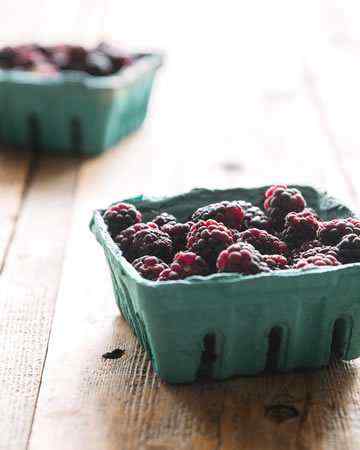 The olallieberry (sometimes spelled ollalieberry, olallaberry, olalliberry, ollalaberry or ollaliberry) is a cross between the loganberry and the youngberry, each of which is itself a cross between blackberry and another berry (raspberry and dewberry, respectively).
It's known for its sweet and tart flavour, firm texture and larger size compared to some other blackberries. Olallieberries are typically cultivated in the Pacific Northwest and are a popular berry for baking, jams and fresh consumption.
Selected in 1937 and tested in Oregon, Washington and California as “Oregon 609”, it was named “Olallie” and released in 1950. While developed in Oregon, it has never been very productive there and is therefore primarily grown in California. “Olallie” means berry in the Chinook jargon. Olallie Lake in Oregon’s Cascade Range is named after the Chinook term due to the abundance of berries in that area.
Hybridization: Olallieberries are the result of a cross between the "Black Logan" and the "Youngberry".
Flavour: They have a balanced flavour profile, being both sweet and tart, with a slightly richer flavour than some other blackberries.
Appearance: Olallieberries are large and shiny, resembling elongated blackberries.
Cultivation: They thrive in the Pacific Northwest, where temperatures are mild and rainfall is abundant.
Uses: Olallieberries are versatile and can be used in various culinary applications, including pie filling, jams, sauces and fresh toppings.
Season: They are typically available from late May through early July in the Pacific Northwest.