Fried Rice with Pork (Chinese)
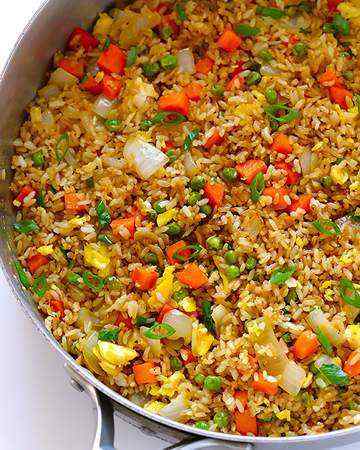 An authentic recipe that can be used for just about any meat or seafood. I prefer making this recipe at home than ordering in as I can be sure there is no additives, preservatives and I have control over the quality of ingredients.
¾ cup onion, finely chopped
2½ Tbsp. oil
1 egg, lightly beaten
3 drops soy sauce
3 drops sesame oil
8 oz cooked lean boneless pork or chicken, chopped
½ cup carrot, finely chopped
½ cup frozen peas, thawed
4 cups cold cooked rice, grains separated (preferably medium grain)
4 green onions, chopped
2 cups bean sprouts
2 Tbsp. soy sauce
Heat 1 Tbsp. oil in wok; add chopped onions and stir-fry until onions turn a nice brown color, about 8-10 minutes; remove from wok.
Allow wok to cool slightly.
Mix egg with 3 drops of soy and 3 drops of sesame oil; set aside.
Add ½ Tbsp. oil to wok, swirling to coat surfaces; add egg mixture; working quickly, swirl egg until egg sets against wok; when egg puffs, flip egg and cook other side briefly; remove from wok, and chop into small pieces.
Heat 1 Tbsp. oil in wok; add selected meat to wok, along with carrots, peas, and cooked onion; stir-fry for 2 minutes.
Add rice, green onions, and bean sprouts, tossing to mix well; stir-fry for 3 minutes.
Add 2 Tbsp. of light soy sauce and chopped egg to rice mixture and fold in; stir-fry for 1 minute more; serve.
Set out additional soy sauce on the table, if desired.
Makes 4 servings.
Cook's Notes: Here are the important things I have learned over the years about making excellent fried rice.
Cold Rice: The key to great fried rice is using cold (or even leftover) cooked rice. There's something about the cold rice hitting a hot pan that makes all the difference. So even if you make a batch of rice just for this recipe, spread it out on a baking sheet or some large surface and pop it in the fridge (or freezer) for about 10-15 minutes beforehand so that it is not warm. You don't want it to be frozen, you want chilled. (I also prefer short-grain rice, but that's a preference - I like mine a little chewy.)
Butter: Yes, butter. I have made many a batch of fried rice using various oils, and I'm now convinced there's a reason why Japanese steak houses use that big ol' slab of butter when they're making fried rice. It just tastes better, and makes everything brown up perfectly. (Although don't be scared - we only use 3 Tbsp. for a very large batch of rice.)
Veggies: This is one of my big pet peeves with lame take-out fried rice — not enough veggies. In addition to adding some nice spots of colour, veggies go a long way in adding some flavour and freshness to fried rice. Our local Chinese restaurant always added both white and green onions, too, which I included in this recipe.
Sesame Oil and Oyster Sauce: If you're really squeamish about seafood, you can leave out the oyster sauce and your fried rice will still be great. But this ingredient makes such a difference in good fried rice, and a little goes a long way. Toasted sesame oil, on the other hand, is 100% non-negotiable. It is my favourite smelling ingredient in my kitchen, and tastes even better. There as well, a little goes a long way. (And it is meant as a finishing oil, not a cooking oil, so remove the pan from the heat once you've added it.)
Cooking the Rice: Take time to let it actually cook for awhile and brown a bit in the pan. So many fried rice recipes have you just stir in the rice and (voila.) you're done. But I've found that actually sautéing the rice for a little while with the veggies helps to get that classic “fried” flavour and pulls all of the ingredients together.