Chickpea Meatballs (Falafel)
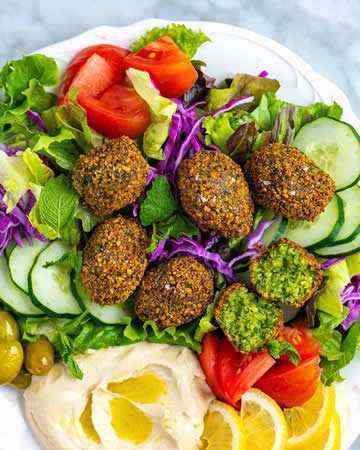 Falafel is a popular Middle Eastern food made with legumes (most often with chickpeas or fava beans) that's mixed with herbs, spices, and then deep fried until crisp golden brown on the outside and tender in the middle. We prefer canned chickpeas or cooked chickpeas: Canned chickpeas are cooked chickpeas. After testing, we have determined that canned or cooked chickpeas do not work as a direct substitute for soaked dried beans in this recipe. The falafel will fall apart in the oil.
8 oz dried chickpeas (1 heaping cup) not canned chickpeas (225 g)
5-6 scallions, trimmed (85 g)
2-4 medium cloves garlic, depending on how much you like garlic
2 cups fresh cilantro, parsley, or mint leaves, packed, chopped (we prefer to use a mixture of all three)
1 tsp. fine sea salt
1 tsp. ground cumin
½ tsp. ground coriander
½ tsp. ground cardamom
1/8-¼ tsp. cayenne pepper, optional
¼ tsp. black pepper, freshly ground
¾ tsp. baking powder, optional
2-3 cups vegetable oil, for frying (480-720 mL)
Rinse the dried chickpeas then place into a large bowl and cover with cool water by about 4". Cover and soak overnight or until the beans triple in size. Drain the soaked chickpeas, rinse, and then pat dry or add to a salad spinner to spin dry.
Add chickpeas, scallions, garlic, herbs, salt, cumin, coriander, cardamom, cayenne, black pepper, and the baking powder to a bowl of a food processor. Pulse the mixture until very finely minced, but not puréed, scraping the bowl down as necessary. You should be able to press a handful together and have it hold its shape (it will be loose and a little crumbly). See our video and photos above for reference.
Transfer the falafel mix to a bowl and cover. Refrigerate for at least 15 minutes to help the balls hold together when cooking. If making ahead, you can refrigerate the mixture for a few days.
Use a Tbsp. or small cookie scoop to scoop out 1½ Tbsp. of the falafel mix then gently shape it into a ball and place onto a clean plate. Repeat with as many falafel as you plan to cook. The mix will not act like dough, but will hold its shape. Watch the video to see how we do this. Optional step: As an extra fail-safe for preventing the balls from falling apart when they hit the oil, rest the falafel balls in the refrigerator for 30-60 minutes before cooking.
Add at least ¾" of oil to a deep saucepan, cast iron skillet or Dutch oven. The smaller the pan, the less oil you will need. The wider the pan, the more falafel you can cook at one time).
Turn the heat to medium-high and heat the oil to between 350 degrees and 375 degrees Fahrenheit.
Fry the falafel in batches, placing them gently into the oil and without crowding in the pan, until they are browned on the bottom sides. Using two forks, carefully flip the falafel to brown the other side, 3½ minutes to 4 minutes total.
Transfer the cooked falafel to a plate lined with paper towel, sprinkle with a little salt, and then repeat with the remaining falafel balls. Serve immediately.
Makes approximately 18 falafel, 4-6 servings.
Cook's Notes:
Dried Chickpeas: I've addressed this further below, but canned or cooked chickpeas are not an option when making falafel. I know there are other recipes that say you can use them, but soaked dried chickpeas will make the best falafel. The taste is so much better and the texture is completely different. For the best authentic falafel, dried chickpeas are your friend.
Onion and Garlic: We like falafel to pack a punch in the flavour department so we use a generous amount of onion and garlic. We've used scallions, yellow onion, and shallots to make falafel. I personally prefer scallions or sweet onion (like Walla Walla or Vidalia), but even I have to admit they aren't a game-changer compared to other onion varieties. Use what you have, just keep in mind if you have an especially strong flavoured onion, you might want to cut back slightly or deflame them (I share how in the notes section in the recipe).
Fresh Herbs: You can see from our photos that we use a lot of fresh herbs in our recipe. If you've followed some of our other recipes, you already know we love using fresh herbs. Falafel is no different, we use 2 packed cups of herbs. We adore the combination of parsley, cilantro, and mint for this. You can, however, use just one or two herbs if that's all you have access to. I love the bright green colour inside each falafel, which is all thanks to the herbs.
Dried Spices: Just like the fresh herbs, we don't hold back when adding dried spices. We add ground cumin (a little smoky), ground coriander (a little nutty with a hint of citrus), ground cardamom (a hint of citrus and herbal), as well as cayenne pepper (hot and spicy). In addition to the spices, we add a generous amount of salt and some ground black pepper.
Baking Powder: We include baking powder as an optional ingredient because you can absolutely make amazing falafel without it. That said, if you have it in the kitchen, adding a little baking powder makes the center of the falafel just a little bit more tender, airy, and light.
What to Serve With and How to Serve Falafel:
There are so many ways to serve falafel. Here are some of our favourite ways:
As an appetizer with your favourite dipping sauce: We cannot recommend our Tahini Sauce enough for dipping your falafel into. This creamy Tzatziki (a cucumber yogurt dip) would also be amazing.
Add falafel to or alongside salads: I love lots of crunch in my salads and especially love shredded purple cabbage, cucumbers, and tomato as a base for falafel. This Tomato Cucumber and Onion Salad is also a favourite (I just spoon it on top of everything).
Make a falafel sandwich: You can add just about anything, but our favourite falafel sandwiches start with pita bread, a spoonful of hummus, lettuce or cabbage, tomato, cucumber, and a drizzle of Tahini Paste or Garlic Tahini Sauce.
Make a falafel platter: Grab the largest plate you own and pile on falafel, creamy hummus (here's our homemade hummus and a roasted red pepper hummus), baba ganoush (a roasted eggplant dip), lots of veggies like carrots, cabbage, and cucumbers, olives, as well as some sauces like tahini or tzatziki.