Veal Cutlets (Italian Cotoletta alla Milanese)
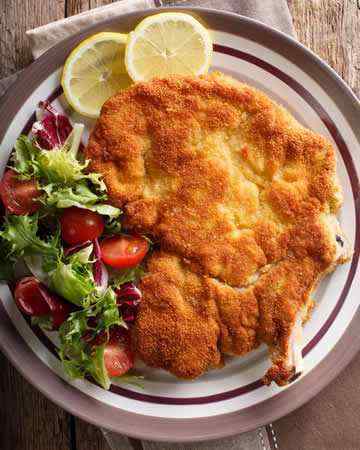 Cotoletta alla Milanese, or Milanese veal cutlet, is a traditional Italian dish which originated in Lombardy, Northern Italy. The dish consists of a veal cutlet lbsed thin, covered in breading and fried in butter. Veal Milanese is quite similar to the Austrian Wiener schnitzel, but they differ in some key points; first, the Milanese cutlet is dredged only in breadcrumbs, while its Viennese cousin gets covered in both breadcrumbs and flour; and second, cotoletta alla Milanese is fried in butter, whereas Wiener schnitzel is fried in lard. Also, a cotoletta alla Milanese differs from the costoletta alla Milanese, with the former being a flattened scallop, and the latter a bone-in rib chop. Even though the preparation processes do not differ, the bone-in version is a more authentic one. To prepare the dish, dip a lbsed veal chop into a beaten egg, and then in breadcrumbs, and fry the veal chops in a lot of butter over moderately high heat. Although the dish is traditionally made with veal, other kinds of meat have become popular to use instead, like chicken or turkey. The poultry variations are especially popular in the USA and other English-speaking countries. Another variation of cotoletta alla Milanese is called orrechio d'elefante (it. the elephant ear). It is comprised of a thinner but a larger cut of boneless meat. Grated parmesan cheese is also sometimes added to the beaten egg or mixed with the breadcrumbs. Cotoletta alla Milanese, also known as fettina panata, is usually served with potatoes, mashed, fried or baked, or some vegetables. Lemon wedges are often served on the side too.
1 cup plain dried breadcrumbs
kosher or sea salt
black pepper, freshly cracked
¼ cup Parmesan cheese, freshly grated
1 Tbsp. fresh parsley, chopped
1 clove garlic, finely minced
4 veal cutlets, bone-in
flour, for dredging
2 eggs, beaten
½ cup olive oil
To Serve:
lemon slices
After removing the membranes of the cutlets, flatten them with a meat tenderizer.
In a small bowl combine the breadcrumbs, salt, pepper, Parmesan, parsley and garlic. Transfer to a shallow plate.
Add the flour to a shallow dish.
In a separate dish add the beaten eggs.
Dredge the cutlets in the flour one at a time. Dip them in the eggs, keeping the bone out. Coat them with the breadcrumb mixture.
Heat the oil in a large skillet over medium heat. Cook the cutlets until golden brown on both sides, about 7-8 minutes per side or until golden brown.
Serve with lemon slices.
Makes 4 servings.
Cook's Notes:
Meat:
Milk-fed veal, with its rosy flesh and subtle taste, is the number one choice for making costoletta alla Milanese. The chops are thin and cook quickly. However, they are not so easy to acquire. The majority of the veal available for purchase is older, closer to vitellone (baby beef), with thicker chops, darker meat, and stronger flavour. If you can't get a hold of milk-fed veal, you can use the baby beef and prepare it using the following method. Trim the outer layer of fat, flatten the meat and marinate it in milk seasoned with a bit of salt for 30 minutes up to an hour. Brown the chop on a lower temperature to make sure it cooks through. If the chops are really thick, brown them on the stovetop before transferring them into the oven (heated to 180°C) for about 15 minutes. When preparing the cutlets, nick the edges with the tip of a sharp knife to prevent the chops from curling up as they cook.
Breadcrumbs:
You can use store-bought plain breadcrumbs, but the traditional version consists of fresh breadcrumbs you can make yourself. Try making the breadcrumbs from some day-old bread in a food processor. Another option is to grate the bread. Use the crumb, not the crust of the stale bread. It is important to bread the meat just before cooking.
Butter:
The traditional preparation process includes frying the meat in clarified butter, which has a higher smoke point than regular butter, meaning it can cook longer before burning. Regular butter burns at 130°C, whereas clarified butter does not burn until the temperature rises up to 170°C. To make some clarified butter at home, melt regular butter in a bain-marie. When a surface foam becomes visible, remove it with a slotted spoon. The milk proteins will deposit on the bottom of the pot, forming a white layer in about 20 minutes. Next, pour the clarified, melted butter into a container using a colander (be careful not to move the bottom layer which will be removed afterward). For a perfect dish, fry the meat at a high temperature (169°C maximum), so it acquires some crispiness on the outside while remaining soft and pink on the inside.
Variations:
Choose between the more traditional, bone-in version, or go for a simpler, veal scallop option. Add some grated parmesan to the beaten eggs or the breadcrumbs. Or, try mixing a bit of nutmeg with the eggs. Another variation includes using a different type of meat, for example, chicken. Some people replace the traditional breadcrumbs with Japanese panko breadcrumbs. You can also try coating the meat just in egg yolks instead of the whole eggs to make the breading stick better since the albumen tends to bubble while cooking. Some sources suggest covering the bone (or the handle) with aluminum foil, so your guests can eat the chop with their hands. In case you'd like the dish to have a more summery feel, spoon a tomato and basil salad on top of the meat before serving.