Veal Shanks Braised In Wine (Italian Ossobuco alla Milanese)
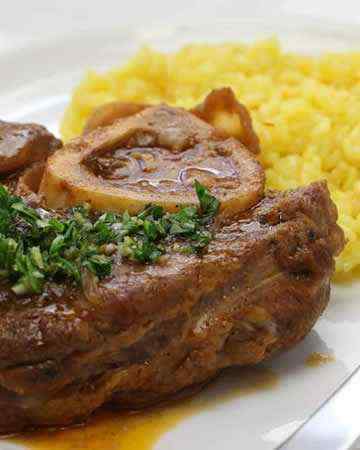 Ossobuco alla Milanese is prepared by wine-braising veal shanks, and then slow- cooking them in beef broth until the meat becomes tender enough to cut with a fork. The word ossobuco refers to the basic ingredient - a cut of beef from the middle part of the hindshank, which, unlike the foreshank, has plenty of tender meat around the bone. Traditionally served with risotto, polenta, mashed potato, or spinach, ossobuco alla Milanese is a delicious and satisfying meal whose relatively low cost and ease of preparation has made it extremely popular both in Italy and abroad. The recipe starts off with a simple soffritto of chopped onion sautéed in butter or oil until translucent. Then, in the same pan, the lightly floured shank cuts are browned on both sides, braised in white wine, and slow-cooked in a covered pan over low heat. Finally, the finished ossobuco is topped with a zesty herb relish made with mashed anchovies, minced garlic, parsley and lemon zest known as gremolà or gremolada alla Milanese.
The original, centuries-old recipe for ossobuco calls for it to be made in bianco (lit. in white), meaning without tomatoes. The tomato was long ignored by Milanese cuisine, despite the fact that it already spread throughout many regions by the 1700s, particularly in the south of Italy. However, the peculiar plant, which was brought to Europe by the Spaniards in the 1500s, was believed by many to be inedible or even poisonous, and it wasn't until the late 19th century that it first began appearing in recipes describing the preparation of Milanese-style ossobuco. In 1891, a recipe for ossobuco was included in Pellegrino Artusi's cookbook La Scienza in Cucina e l'Arte di Mangiar Bene, the first collection of Italian national recipes ever published. In 2007, ossobuco alla Milanese was recognized and protected as a part of the Italian Denominazioni Comunali, an official public acknowledgment that this dish originated from and is linked to the City of Milan.
4 veal shanks (approx 330 g each, 4 cm thick)
white flour, as needed
butter (60 g)
2 spring onions
1 small carrot
good-quality, dry white wine (1 dL)
beef and/or veal broth, from bones
white pepper, freshly ground
kosher salt
Gremolada Alla Milanese:
1 handful fresh parsley, chopped
1 lemon, freshly zested
1 large clove garlic
2 anchovy fillets (optional)
Optional:
a small amount chopped tomato, or tomato paste
extra-virgin olive oil in addition to butter
Make small cuts along the edges of veal shanks, as that will prevent the meat from shrinking during cooking.
Sauté onions and carrot in butter, until softened, then transfer them to a plate. Dip the veal shanks in flour, patting off any excess.
In the same pan, brown the veal shanks on each side, then add the carrots and onions and pour in the white wine. Lower the heat, and wait until the wine evaporates.
Next, pour a dL of broth into the pan and season with pepper and salt. Cover with a lid and let it simmer, turning the meat from time to time, or adding more broth if necessary.
The meat is done when it falls off the bone. At that point, put each ossobuco on a separate plate, top the meat with gremolata, and then pour them over with the sauce from cooking.
Makes 4 servings.
Cook's Notes:
Ossobuchi or Veal Shanks:
Look for a meatier cut, namely one that is from the top part of the thigh, and whenever possible opt for veal shanks from a young, milk-fed calf. Also, it is essential that you leave the skin on, as that helps to keep the ossobuchi in place during cooking.
Method:
Employing the method Italians call arrosto morto, means that once the added wine has evaporated, the meat is covered and simmered over low heat until it falls off the bone. On the other hand, most recipes today braise the meat in the oven. Another tip some recipes suggest is that you tie a twine around the shanks to keep them intact during cooking.
Gremolada alla Milanese:
A zesty herb relish gremolada alla Milanese consists only of garlic, parsley, and lemon zest. Anchovies, although common, are optional. You can add the gremolada near the end of cooking, or just before serving. Also, you should make more gremolada than instructed in the recipe so that diners can season their dish to their liking.
Tomatoes:
Tomatoes, even though considered commonplace today, are actually optional, and many recipes completely exclude them. In case they are employed, most recipes call for only a small amount, about one tomato per four servings, as too much of it can overpower all the other ingredients.
Serving:
The traditional pairing for ossobuco is risotto alla Milanese, a saffron-flavoured rice which is also prepared with bone marrow. Other options include mashed potatoes, spinach, polenta, or just some crusty bread. The marrow should also be eaten up. In Italy, they use a special long-handled spoon called essatore to reach it and to dig it up. In case you don't own one, a baby spoon is a good enough substitute.