Veal with Prosciutto and Sage (Italian Saltimbocca alla Romana)
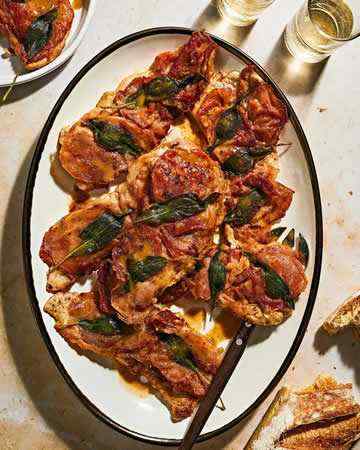 In Italian, Saltimbocca literally translates to "jumps in your mouth" - so yes, it's extremely flavourful. The combination of prosciutto and sage is a classic that pairs with just about any side or salad. Saltimbocca (also saltinbocca) is an Italian dish (also popular in southern Switzerland, Spain and Greece) made of veal lined or wrapped with prosciutto and sage; marinated in wine, oil or saltwater depending on the region or one's own taste. A mainstay at trattorias throughout Rome, this quick and elegant dish calls for just three main ingredients: veal cutlets, prosciutto, and fresh sage. Served with a simple sauce made by deglazing the pan with Marsala, it's slightly salty, slightly woodsy, and entirely sumptuous.
8 (2 oz each) veal cutlets, preferably from the veal top round
kosher or sea salt
black pepper, freshly ground
16-24 thin slices prosciutto
16-24 fresh sage leaves
½ cup all-pupose flour, unbleached
8 Tbsp. extra-virgin olive oil
12 Tbsp. unsalted butter
¼ cup Marsala wine
1 cup chicken stock
Using a meat mallet, pound the veal cutlets, one at a time, between 2 sheets of plastic wrap until each piece is about 1⁄8" thick. Lightly season with salt (little is needed, as prosciutto is salty) and pepper to taste.
Lay 2-3 slices of prosciutto atop each piece of veal, gently pressing prosciutto against veal to adhere. Place 2-3 sage leaves on top of the prosciutto and stitch them into the veal with toothpicks. Place the flour on a large plate. Dredge each piece of veal in the flour, shake off any excess, and set aside.
In a 12" skillet, heat 2 Tbsp. of the oil and 2 Tbsp. of the butter over medium-high. Add 2 pieces of veal and cook, turning once, until the prosciutto side is crisp and the veal side is lightly browned, about 1 minute per side.
Transfer the meat to a paper towel-lined plate; drain and discard the oil and butter from the skillet. Repeat this process with more oil, butter, and the remaining meat. Remove and discard the toothpicks.
Drain and discard the oil and butter from the skillet; place over high heat. Add the Marsala; cook, scraping up browned bits, until reduced by half, 1-2 minutes. Add the stock; reduce by half, about 3 minutes. Stir in the remaining 4 Tbsp. of butter; reduce heat to medium. Return meat to skillet; cook, turning occasionally, until sauce thickens slightly, 1-2 minutes.
Transfer to a platter and serve. Alternatively, drizzle the pan sauce over the meat and serve.
Makes 4 servings.
Cook's Notes:
Veal:
Saltimbocca is made with thin slices of veal cut from the top round, which are to be cut against the grain so that the fibers are short, otherwise the meat curls and toughens during cooking. Another trick to help prevent the meat from toughening is to lbs the veal slices very thin using a meat mallet. Veal scallops for saltimbocca are usually pounded to a thickness of about 1/8-¼" which.
Prosciutto:
Italian prosciutto is especially sweet, and can't really be substituted with any other type of ham. Some recipes call for using a particular variety like prosciutto di Parma or prosciutto di San Daniele, but pretty much any Italian-made ham will do. The prosciutto slices must be paper-thin and you need to be careful while browning the scallops as prosciutto hardens if it fries for too long.
Technique:
You can avoid using toothpicks by placing sage leaves directly onto veal scallops, and topping them with slices of prosciutto; this way the prosciutto will stick to the scallops by itself and keep the sage in place. Alternatively, you can make rolls, which will have a more tender and juicy inside, but because less surface is exposed to heat during cooking, they pack less flavour.
Equipment:
The choice of utensils depends on which recipe method you follow. If you're simmering veal scallops in wine, use a non-stick skillet, but if you're deglazing, stainless steel or copper pans are a much better choice.
Serving:
Traditional side dishes include Roman green peas (piselli alla Romana) and sautéed spinach, but you can serve it with any kind of sautéed, boiled, and grilled vegetables, potatoes, mashed potatoes, or a salad.