Ham
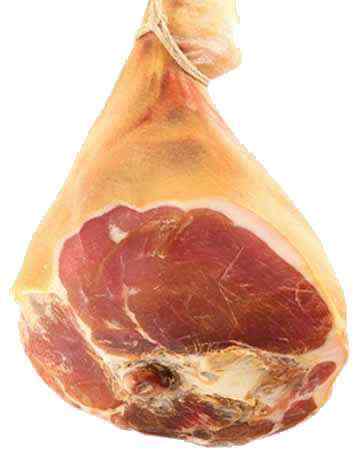 Ham, the rear leg of a hog prepared as food, either fresh or preserved through a curing process that involves salting, smoking, or drying. The two hams constitute about 18–20 percent of the weight of a pork carcass. In the United States and Canada, shoulder portions of pork carcasses are frequently processed and marketed as shoulder hams, picnic hams, Callies, and Californias, but such products are inferior to true ham. Most ground ham spreads, sold under a variety of trade names, are processed from pork shoulders and ham trimmings.
A compact source of high-grade animal protein, ham compares favourably with good beef in this respect and has available energy ranging from 1,200 to 2,600 calories per pound, depending on fatness. It is an outstanding source of thiamine (vitamin B1), iron, riboflavin, niacin, phosphorus, and calcium. Ham was one of the most ancient meats of civilized peoples and was common throughout Europe and Asia except where forbidden by religious edict. Introduced to the American continents by the first European settlers, it became a favoured food on the farms of North America, where home curing of hams became an elaborate tradition of the late fall and winter months. Losses through putrefaction were high, however, and product quality varied greatly.