Chestnut Flour
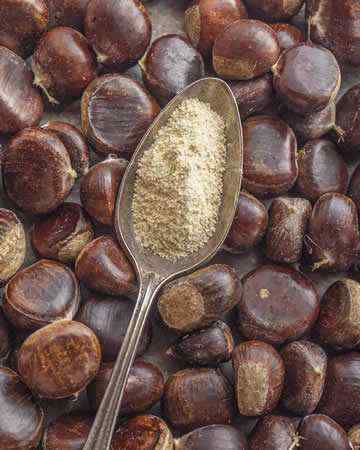 Little known outside of Italy and Europe, chestnut flour (farina de castagne) has been a staple crop in Northern Italy for thousands of years. At roughly four times the price of wheat flour it's a very special ingredient worth getting to know. Chestnut flour has a history. Different varieties of chestnuts grow throughout the temperate zone and many cultures have made use of the nut as a food source. In North America, Indigenous peoples made flour from the dried nuts and ate the whole nuts as vegetables. However, this was before the chestnut blight almost eradicated the native chestnut. In Europe, chestnut flour was generally considered a famine food - a poor person's substitute for wheat flour. This was not because of taste (it's delicious) but because chestnut flour contains no gluten, which means it doesn't rise. Any bread made with chestnut flour alone will be flat and apparently, flatbread was under-appreciated in 18th-century Europe.
Chestnuts are high in carbohydrates, low in fats and have no cholesterol. Try using it in applications, like crêpes, polenta, pasta and pancakes, where you aren't using yeast to have the bread rise. It can also be substituted for up to 20 percent of the regular flour in a recipe to add a light sweetness to baked goods, or can be the main feature of many great dishes.
1 lb fresh whole chestnuts
Gather chestnuts and remove spiky burrs if necessary. If nuts are dirty, wash and dry them. Carefully cut chestnuts in half with a large kitchen knife.
Preheat oven to 350°F (177°C) and place chestnuts nut-side-up on baking sheets. Bake for 35 minutes, then let cool. Remove shells and papery inner skins (testa).
Pulse SMALL batches of chestnuts in food processor until broken into smaller chunks. Then pulverize for 2-3 minutes until you've achieved a fine, damp texture.
Dry pulverized chestnuts in food dehydrator, oven, or in open air. A food dehydrator is easiest. If using dehydrator, dehydrate for 24 hours on 125°F (52°C).
Return dried pulverized chestnuts to food processor (in multiple batches depending on volume you're making) and blend for another 2-3 minutes to achieve a finer, flour-like consistency. Alternately, for finest texture, use a grain mill if you have one available or budget allows.
Store finished chestnut flour in your freezer in freezer bags for longest shelf life (1-2+ years). Alternately, stored in airtight containers at room temp, chestnut flour can last for up to a year.
How to Use Nut Flours:
- Nut flour can be used in place of regular flour. One to one in baking recipes, but the final outcome will be different both in taste and texture. To compensate for the denser texture, use a little extra leavening in your baking recipes.
- You can use nut flours in savoury cooking too. Try coating meat and vegetables in place of breadcrumbs.
- For frying or baking, or sprinkling over soups, stews and pasta dishes to make a crunchy topping.
- Nut flours can also be a great substitute for breadcrumbs in meatloaves or meatballs.
- Nut flours can be used to make cookies, muffins, cakes, pancakes and pizza crusts.