Bolognese Sauce (Slow-Cooker)
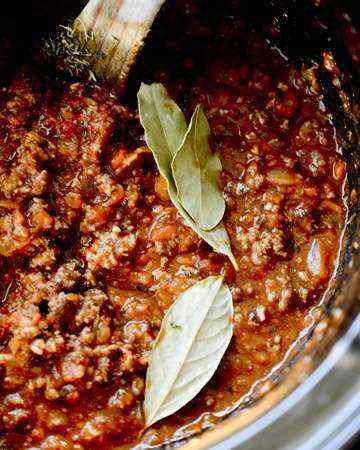
The key to a good bolognese is simmering it very slowly over low heat for several hours. This long simmering makes the beef incredibly tender and turns the sauce into something that will make your eyes roll up in your head. I've found it tricky to maintain this kind of gentle simmer on the stovetop, where even the lowest burner can be a bit too high, so a few years ago I started using my slow cooker. Its ability to maintain a low, steady heat for hours is perfect for a dish like this.
I'll tell you upfront — this isn't one of those slow-cooker recipes where you can dump everything together and walk away. But the extra work of browning the beef and sautéing the vegetables at the beginning is very much worth it! These steps translate directly into the deep flavor that makes this sauce so irresistible. You can also prepare the beef mixture the night before and finish cooking it with the tomatoes in the slow cooker the next day. Leftovers also freeze well, so go ahead and make a double batch!
Serve this bolognese sauce over spaghetti, layer it into a lasagna (as is traditional), or serve it with any other kind of pasta. I particularly like serving it with rotini or campanelle because the little folds are great for catching bits of sauce. For a gluten-free dish, bolognese is also fantastic scooped on top of polenta.
1 Tbsp. extra-virgin olive oil
1 medium yellow onion, finely chopped
2 stalks celery, finely chopped
1 medium carrot, finely chopped
6-7 cloves garlic, minced
2 Tbsp. tomato paste
1½-2 lbs ground beef
2 tsp. sea salt
½ tsp. dried thyme or 1 tsp. fresh thyme, minced
½ tsp. dried oregano or 1 tsp. fresh oregano, minced
½ tsp. pepper
1/8 tsp. nutmeg
1 cup milk (whole or 2%)
1 cup white or red wine or use reserved liquid from tomatoes
2 (28 oz) cans of whole peeled tomatoes
1-3 bay leaves
To Serve:
cooked pasta
Parmesan cheese, freshly grated
Heat the olive oil in a Dutch oven or large skillet over medium heat. Add the onion, celery, and carrot, and cook until the onion is translucent and all the vegetables have softened, 6-8 minutes. Add the garlic and the tomato paste, and cook until the garlic is fragrant, about 30 seconds. (If your skillet isn't big enough to also accommodate the beef at this point, transfer the vegetables to the slow cooker and continue cooking the beef by itself.)
Add the beef, breaking it apart with your spoon and cooking until it is just browned. Stir in 1 tsp. salt along with the thyme, oregano, pepper, and nutmeg.
Stir in the milk and bring it to a rapid simmer. Continue simmering until the milk has reduced completely and very little liquid remains, about 10 minutes. Stir in the wine and simmer again until reduced completely, about 10 minutes. Using a slotted spoon, transfer the beef mixture to the bowl of a 6-quart (or larger) slow cooker.
Open the cans of tomatoes and strain through a strainer, reserving the juices. Transfer the tomatoes to the slow cooker, squishing them in your fist or mashing them against the side of the slow cooker to break them down into small pieces.
Add the bay leaf to the slow cooker and stir everything together. The mixture should have a thick, saucy consistency, neither overly soupy or too dry. If it looks dry, mix in a little of the reserved tomato juices until it looks sauce-like. If it looks too soupy, don't worry about it right now - you can let excess liquid evaporate at the end of cooking.
Cover the slow cooker and cook on LOW for 6-8 hours.
In the last half hour of cooking, check the sauce. If it looks soupy, remove the lid to allow any excess liquid to evaporate and reduce the sauce. If it looks a little dry, stir in some of the reserved tomato juices. The finished sauce should be thick and creamy.
Serve the sauce over pasta with Parmesan sprinkled on top, or layer it into a lasagna. Leftovers will keep refrigerated for 5 days or can be frozen for up to 3 months.
Makes 6-8 servings or 6 cups.
Cook's Notes:
- Oven-cooking instructions: You can duplicate this recipe in a covered Dutch oven. Preheat the oven to 300°F. Prepare the recipe in a Dutch oven, cover the pot, and transfer it to the oven to cook. Cooking time will be 2-3 hours - check the sauce every hour to see how it's coming along and add more of the reserved tomato juices as needed if the bottom of the pot becomes dry.
- Doubling the recipe: This recipe freezes so well that I often make a double batch and freeze what I won't eat right away. Double all the ingredients except for the bay leaf.
- Freezing bolognese sauce: Freeze the sauce in individual portions. It's best to let the portions thaw in the fridge overnight before warming, but frozen bolognese can also be thawed and warmed in a covered pot over very low heat on the stovetop.