Meat Sauce (Italian Ragù Napoletano)
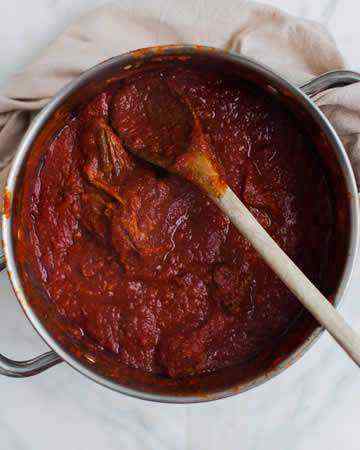 Neapolitan ragù (known in Italian as ragù alla napoletana pronounced or ragù napoletano) is one of the two most famous varieties of meat sauces called ragù. It is a speciality of Naples, as its name indicates. (The other variety originated in Bologna and is known in Italian as ragù bolognese or ragù alla bolognese.) The Neapolitan type is made from three main parts: a soffritto, meat, and tomato sauce. However, a major difference is how the meat is used, as well as the amount of tomato in the sauce. Bolognese versions use very finely chopped meat, while Neapolitan versions use whole meat, taking it from the casserole when cooked and serving it as a second course or with pasta. Also, the Neapolitan soffritto contains much more onion compared to the Bolognese. Preferences for ingredients also differ.
In Naples, white wine is replaced by red wine, butter by lard or olive oil, and lots of basil leaves are used where Bolognese ragù has no herbs. In the Neapolitan recipe, the content may well be enriched by adding raisins, pine nuts, and involtini with different fillings. Milk or cream is not used, and a relative abundance of tomato sauce in flavour, in contrast to Bolognese use of a minimal amount, is preferred. The tomato season is much longer in more southern Naples than in more northern Bologna. Like the Bolognese, Neapolitan ragù also has quite a wide range of variants, the best known of which is ragù guardaporta (doorman's ragù).
Neapolitan ragù has many similarities with, and is ancestral to, the Italian-American "Sunday gravy", the primary difference being the addition of a greater variety of meat in the American version, most famously meatballs (whence spaghetti and meatballs), braciole, sausage, and pork chops. The Neapolitans say that, according to tradition, at some point it must "addà pippià" - a local way of saying that it must simmer slowly, very slowly. To prepare the authentic sauce for the traditional neapolitan ragù recipe, it takes tomato sauce and meat, passion, skill and at least 6 hours of cooking; or so that is what the official "rules" of the tradition dictate.
1½ lbs top round steak, cut ⅛" thick
sea salt
black pepper, freshly cracked
⅓ cup flat leaf parsley, minced
¼ cup Pecorino cheese, grated
4 meaty spareribs, on the bone
2 Tbsp. Filippo Berio extra virgin olive oil
1 onion, coarsely chopped
1 rib celery, coarsely chopped
1 large carrot, coarsely chopped
2 large cloves garlic, minced
1 bunch basil leaves, stemmed and torn into pieces
3 (28 oz) cans ground plum tomatoes
½ cup dry red or white wine
1 Tbsp. sea salt
black pepper, freshly cracked
1 Tbsp. sugar
Dry the round steak with paper towels and rub it on both sides with kosher or sea salt black pepper, freshly cracked. Sprinkle the meat with the parsley and cheese. Roll the meat up like a jellyroll and tie it in several places with kitchen string. Salt and pepper the spare ribs. Set the meats aside.
Heat the olive oil over medium heat in a large heavy duty pot. Over medium heat, brown the round steak and spare ribs in the oil on all sides. This will take about 5 minutes.
Stir in the onion, celery and carrot and continue cooking until the vegetables begin to soften. Stir in the garlic and basil. Cook 1 minute.
Combine the tomatoes and wine in a bowl. Slowly pour the mixture over the meat. Stir in the Tbsp. of salt, a grinding of pepper, and the sugar. Cover the pot, bring the sauce to a boil, then lower the heat to simmer and cook the sauce until the meat is fork tender, about 1½ hours.
Remove the meat to a dish. Cover the dish and refrigerate the meat to make it easier to cut when cold. When ready to use, transfer the round steak to a cutting board and cut the strings from the round steak with a kitchen scissors. Cut into neat slices about ¼-½" thick. Add to the sauce. Cut the meat off the bones of the spareribs and add the pieces to the sauce.
Use the sauce for macaroni dishes both boiled and baked.
Cook's Note: The sauce (with the meat) can be frozen in batches for future use for lasagne, pasta dishes, with vegetables such as green beans, zicchini, and eggplant, and over pizza.