Lasagna (No Cook Noodles)
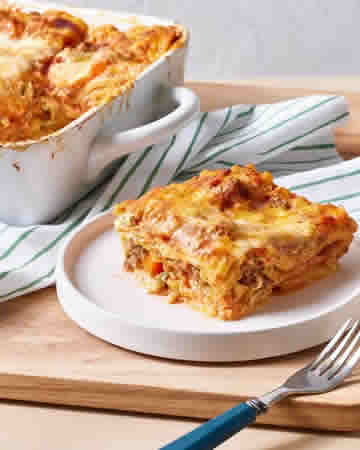 This is our ultimate lasagna for both flavour and ease of prep. This is our ultimate meat lasagna recipe - the one we make often and to great acclaim. It has two fillings, a meat sauce that's made with both Italian sausage and ground beef simmered in tomato sauce. The second filling is a cheesy mixture of mozzarella, ricotta and Parmigiano-Reggiano speckled with parsley. Each shines on its own, but together they soar like an aria between layers of lasagna noodles. Once you have your ingredients and equipment assembled, making this lasagna is a straightforward process. The recipe requires about 45 minutes of prep and 1 hour 10 minutes to bake.
Meat Sauce:
3 Tbsp. extra-virgin olive oil
1 lb 85% lean ground beef (450 g)
1 lb sweet Italian sausage, casings removed (450 g)
1½ cups onion, finely chopped (~ 1 medium)
1 cup carrots, peeled and finely chopped (~ 2 carrots)
1 cup celery, finely chopped (~ 2 stalks)
sea salt
2 Tbsp. garlic, minced (~ 6 cloves)
2 tsp. dried oregano
½ tsp. red-pepper flakes
3 Tbsp. tomato paste
2 (28 oz) cans whole tomatoes, peeled, with juices (2x680 mL)
Cheese Mixture:
3 cups (24 oz) cottage cheese, puréed (680 g)
1 cup whole milk or half-and-half cream (240 mL)
3 large eggs
1½ cups Parmigiano-Reggiano cheese, finely grated (4 oz)
4 cups (1 lb) low-moisture mozzarella, freshly shredded (450 g)
¾ cup flat-leaf parsley, freshly chopped
sea salt
black pepper, freshly ground
Assembly:
18 dry lasagna noodles
Preheat oven to 375°F (190°C/170°C fan, Gas Mark 5).
Heat oil in a large saucepan over medium-high. Add beef, sausage, onion, carrots, celery and 1 tsp. salt. Cook, stirring occasionally and breaking up meat into bite-size pieces, until vegetables soften and meat has browned, about 10 minutes.
Add garlic, oregano and red-pepper flakes; cook until fragrant, 1 minute. Add tomato paste; cook 2 minutes more.
Purée tomatoes in a blender or food processor. Add tomatoes to pan. Bring to a boil, then reduce heat to low and simmer, stirring occasionally, until reduced and thickened slightly but still very loose, about 15 minutes. Remove from heat.
In a large bowl, whisk together ricotta, milk, eggs, 1 cup Parmigiano-Reggiano, 2½ cups mozzarella, parsley, 1 tsp. salt and ¼ tsp. pepper.
Spread 2 cups meat sauce evenly in a 9x13" baking dish, preferably ceramic or enameled cast iron.
Arrange 3 lasagna noodles over sauce (space noodles evenly; they will expand as the lasagna cooks). Spread 2 cups cheese mixture over noodles. Top with 3 more noodles.
Repeat layering of meat and cheese mixtures between noodles twice more. Spread 2 cups meat sauce evenly over top layer of noodles.
Sprinkle evenly with remaining 1½ cups mozzarella and ¼ cup Parmigiano-Reggiano. Loosely cover with parchment part then with aluminum foil and transfer to a rimmed baking sheet.
Bake until noodles are tender but still al dente (easily pierced with the tip of a knife), 40-45 minutes. Uncover; continue baking until bubbly and puffed slightly along edges and golden brown in places on top, 20-25 minutes more. (There may appear to be a lot of liquid in the dish. It will be absorbed as the lasagna cools.)
Transfer dish to a wire rack and let cool slightly and set, about 20 minutes; cut into squares to serve.
Extra Sauce: You may have some meat sauce leftover after you assemble the lasagna. Save it. Try tossing it with pasta for a quick supper, sandwiching it between potato buns for sloppy Joes, or serving it with fried eggs for breakfast.
Makes 8-10 servings.
Cook's Notes:
- Ground Beef: We use 85-percent lean ground beef for the right ratio of fat to lean.
- Italian Sweet Sausage: This is the most unusual ingredient in our lasagna. Most recipes call for just ground beef and some incorporate ground pork too, but we prefer the already-seasoned pork flavour of sweet Italian sausages removed from their casings.
- Canned Tomatoes: We use a can of whole peeled tomatoes and blitz them in a food processor, rather than using store-bought crushed tomatoes.
- Dairy: This recipe calls for low-moisture mozzarella, but we use whole milk ricotta and whole milk; together, these dairy ingredients create the rich cheese filling that shines in the lasagna.
- No-Boil Lasagna Noodles: Using no-boil noodles speeds up the process of making the lasagna (no boiling needed, no extra pan to clean). This recipe includes covering the lasagna while it bakes, which means there's no need to pre-cook these pasta sheets.
- Make-Ahead: This lasagna can be assembled and stored in the refrigerator up to a day in advance, then baked for serving.
Storage:
- Leftovers: Cover any leftover lasagna before refrigerating. If there are only a couple of portions left, wrap them in parchment paper then foil and store in a plastic bag in the refrigerator for ease of reheating. (They will also take up less space in your refrigerator that way.)
- Freezing: Leftovers also hold up well in the freezer. Package individual slices in parchment then foil and store in a freezer bag for up to a month.
- Reheat: Bake, still wrapped in the parchment-lined foil, at 375°F (190°C/170°C fan, Gas Mark 5) for about 20 minutes, or until heated through.
Frequently Asked Questions:
- Does authentic lasagna have ricotta or béchamel? Whether authentic lasagna has ricotta or béchamel depends who you ask. Traditional lasagna from the north of Italy, such as from Bologna, is made with béchamel sauce. Some versions made in the South use a mixture of ricotta and mozzarella rather than béchamel, similar to that used in this recipe.
- Is it better to cover lasagna while baking? Yes, often it is better to cover lasagna while it is baking but not for the entire cook time. This recipe calls for covering the dish for most but not all of its baking. The parchment-and-foil cover is removed for the last third of the time so that the top of the lasagna has time to brown and develop those delicious crispy edges.
- Is it better to cook lasagna in glass or metal pan? We prefer to cook lasagna in a ceramic pan rather than a glass or metal pan. A ceramic pan is our go-to for all kinds of baked pasta dishes. If we don't have a ceramic pan, we would use an enameled cast-iron pan, but we would not use other types of metal pans for lasagna. We also prefer ceramic or enameled cast iron over a glass baking pan for this dish.
- Do you put meat sauce at the bottom of lasagna? Yes, we do put meat sauce at the bottom of the lasagna pan when we assemble the dish. An even layer of sauce across the bottom of the dish is essential whether it's a meat sauce or a marinara sauce. If you put the lasagna noodles directly in the pan without the sauce, they will stick to the pan as they bake.
- How many layers should lasagna have? The number of layers in lasagna varies according to different recipes and personal tastes. We recommend having three layers of each element of the filling when making our lasagna with meat sauce. This results in a rich layered lasagna that is still easy to cut and get from the baking dish to the plate without collapsing. If a lasagna gets too tall, it will be difficult to get portions out of the baking dish in one piece.