Lasagne (Italian Northern)
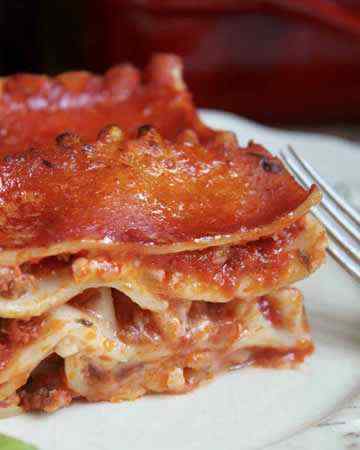 This authentic Northern Italian lasagna is classic, simple and absolutely delicious, as well as being a perfect freezer meal. If you want a lasagna that’s packed with a laundry list of ingredients including: sausage (with ground beef), ricotta (or worse yet, cottage cheese), sour cream, sugar, Italian seasoning and other crazy ingredients that you’d never find in authentic Italian lasagna, you better find another recipe, because this is not it. Despite what you might think, there are not very many ingredients in a basic Italian lasagna. The lasagna noodles, a meat sauce, béchamel sauce and mozzarella are practically all you need. I don’t understand the need to complicate recipes. When you use really good quality ingredients, few are required and it will taste better than any 40 ingredient recipe.
Meat Sauce:
4 Tbsp. extra-virgin olive oil
3-4 cloves garlic
2 Tbsp. fresh parsley, chopped
1 lb ground beef
42 oz Italian tomato purée (passata) or whole tomatoes, puréed (the very best choice is San Marzano dell'Agro Sarnese-Nocerino, DOP) (If using 24 oz jars, you'll need 1¾ jars - if using 28 oz cans, use 1½ cans.)
sea salt
black pepper
fresh basil
Béchamel Sauce:
3 oz butter
4 oz all-purpose flour, unbleached
24 oz milk
dash nutmeg
sea salt
white pepper
Assembly:
1 lb lasagna noodles or sheets (from Italy or homemade)
10 oz mozzarella cheese, freshly shredded
2 Tbsp. Parmigiano Reggiano cheese, freshly grated
Garnish:
Parmigiano Reggiano cheese, freshly grated
Make the Meat Sauce:
In a large, heavy pot, put the olive oil, garlic and parsley over medium high heat. When the garlic begins to brown, increase the heat and add the ground beef. Break up the beef, but keep it rather chunky. Sprinkle with about ½ tsp. of salt.
When the beef is beginning to dry up, add the tomatoes and stir well. Add more salt, then lower the heat and allow to simmer for about an hour, stirring from time to time. Taste for salt and add pepper.
When the sauce is ready, add the torn basil leaves. Remove about a cup (8 oz) of plain sauce (leave the ground beef in the pot and save for the top layer). Refrigerate the meat sauce when cool, or set aside if using right away.
Make the Béchamel Sauce (while the sauce is simmering):
Melt the butter in a medium pot then add the flour. Keep stirring to cook the flour for at least 5 minutes, but don't let it brown. Pour in a little of the milk, and stir quickly to incorporate.
Continue stirring and adding milk a little at a time. Once all the milk is mixed into the flour and butter mixture, add more.
Add more milk each time as the composition gets more sauce-like.
When all the milk has been added, season with about ½ tsp. salt, a dash of nutmeg and about 1/4 tsp. white pepper. Taste and adjust as needed. Keep a lid on the sauce if not using right away.
Cook the Noodles (Skip this step if using no-cook lasagna noodles).
Boil the noodles in plenty of salted water, making sure to keep moving them so they don't stick together. Remove the noodles from the heat 5 minutes BEFORE the instructed time on the box.
Reserve about 2 cups of the pasta water. Drain most of the water and then fill the pot with cold water just to cover the noodles. This will stop the pasta from cooking further.
Assemble the Lasagna:
Put a thin layer of sauce (no meat) on the very bottom of the 9x13" pan.
Add three pieces of lasagna lengthwise, then top generously with a quarter of the bechamel sauce.
Next, dollop on the meat sauce, but don't add so much that the lasagna will only be sauce at the end.
Sprinkle on about a quarter of the mozzarella.
Then top with more lasagna sheets, however, this time, cut them to 9" strips so that you can place them in the opposite direction. This gives the lasagna structure so that it can hold together when cut. Cut the pieces so that it covers the bottom layer without leaving too much space.
Repeat with the béchamel, meat sauce and mozzarella another three times so that there are 5 layers of pasta and 4 layers of filling.
You may or may not have leftover meat sauce, depending on how much sauce you added. However, if you do use it all, take some of the reserved pasta water (about a cup) and rinse the pot with it and add it to the lasagna before the top layer goes on.
Alternatively, just pour the water directly onto the lasagna. We didn't fully cook the pasta, so it will absorb more liquid as it cooks in the oven.
The top of the lasagna will have the strips lengthwise, so I usually pull four (I overlap the top layer) of the best looking pieces (which aren't broken or cut) and save them for the top.
Lastly, sprinkle some grated Parmesan on top of the lasagna before baking.
Bake the Lasagna (or Freeze at this Point).
Cover with foil (but make sure the foil doesn't touch the lasagna as tomatoes will eat through the foil) and put in a preheated 400°F (200°C/180°C fan, Gas Mark 6) oven for 20 minutes.
Remove the foil and continue to bake for another 10-20 minutes, depending on how crispy you want the top.
The edges will be bubbly when you remove it from the oven, so be careful. Allow to cool for about 10 minutes before cutting.
Makes 12 servings.
Make-Ahead:
- Lasagna is one of the best make-ahead dishes to freeze. It freezes incredibly well. You can freeze the entire tray, or cut into pieces and freeze individually, whichever way you prefer.
- My recommendation is to freeze the lasagna after assembling then defrost and bake as directed.
- If you have leftovers, or choose to freeze after baking, that is a great option, as well. Freezing in individual servings after baking is a marvelous idea, especially for singles or couples.
Nutrition Information:
Per Serving: Calories: 416, Total Fat: 24g, Saturated Fat: 10g, Trans Fat: 1g, Unsaturated Fat: 11g, Cholesterol: 70mg, Sodium: 442mg, Carbohydrates: 29g, Fiber: 3g, Sugar: 3g, Protein: 22g