Schmaltz and Gribenes (Jewish New York)
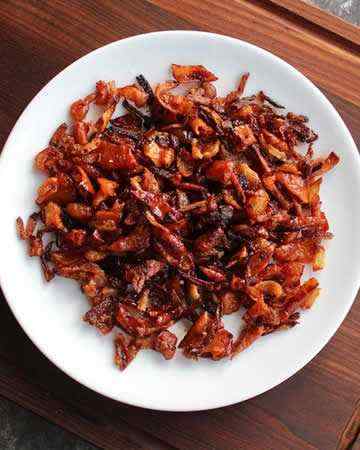 Anybody who wants to make truly authentic Ashkenazi Jewish cuisine must first learn how to make schmaltz and gribenes. Schmaltz is rendered chicken fat, which is an important component of many traditional recipes. Sometimes referred to as "Jewish bacon", gribenes are crispy, salty, sinfully delicious morsels, a byproduct of the fat rendering process.
To the modern health-conscious cook, schmaltz and gribenes might sound like a heart attack waiting to happen. Schmaltz is a high cholesterol fat, but it adds a very unique flavour to dishes that is unmatched by any other type of oil. While many people find gribenes delicious, others might consider them too strange or unhealthy to enjoy. Take them or leave them, schmaltz and gribenes are quintessentially Jewish. Schmaltz in particular adds an authentic flavour to many Ashkenazi Jewish recipes, including matzo balls and chopped liver.
Though richly flavoured, both schmaltz and gribenes were born of frugality. In Eastern European countries, chicken meat was an expensive treat. When a chicken was purchased from the butcher, every part of the bird was used. Schmaltz and gribenes are two creative ways of using parts of the chicken that might otherwise be thrown away.
1 lb chicken, skin-on, cut into narrow ½" pieces
1 tsp. sea salt
¼ tsp. black pepper, freshly cracked
1 medium onion, sliced into thin ¼" pieces
Note: 1 pound of chicken skin and fat can be obtained from about 15 lbs of bone-in, skin-on chicken thighs. Or, save and freeze chicken skin instead of discarding it in various recipes, then make schmaltz when you have collected enough. While the 1 pound weight is a guideline for this recipe, you can easily adjust the ratio above for less or more chicken skin as needed.
Skillet Method:
Rinse the pound of chicken skin and fat, pat dry, then chop it into small ½" pieces.
Toss the chicken skin pieces with 1 tsp. kosher salt and ¼ tsp. black pepper. Place the skin and fat into a skillet on the stovetop (make sure it's cast iron or nonstick) and turn heat to medium low. Cover the skillet and let it cook on medium low for about 15 minutes. Liquid fat will start to pool at the bottom of the skillet.
Uncover the skillet and raise heat to medium. At this point you can add onion, which will give you an onion flavoured darker coloured schmaltz, or you can render the fat without onion for a cleaner, purer fat with no onion essence. Most Jewish cooks prefer to render the fat with onion.
Let the skin and fat cook for another 15-20 minutes, breaking the pieces apart with a spatula and stirring frequently, until the skin starts to brown and curl at the edges. At this point there should be quite a bit of liquid fat at the bottom of the pan - this liquid is your schmaltz.
Remove pan from heat. Pour the schmaltz from the skillet into a container, using a mesh strainer to catch any small pieces of skin. A golden oil will result - this is called schmaltz. It can be used in a variety of Jewish dishes or as a cooking fat.
If you cooked the onions as the fat rendered, your oil will be a darker golden colour with an orange hue. The schmaltz will stay liquid at room temperature; it will become solid and opaque if you refrigerate it.
If you cooked the skin and onion together, return to medium heat and continue cooking in the skillet until the skin is deeply golden, curled and crispy, and the onions are dark brown. Drain on a paper towel and serve.
If you did not cook the onions with the skin, you can cook them after the schmaltz is collected. Return the cooked chicken skin and fat to the skillet.
Turn heat to medium and sauté the mixture for about 20 minutes, stirring frequently. Don't leave them alone for long or they'll burn. Adjust heat lower as needed to keep from blackening too much.
When pieces are dark brown and crispy, remove the gribenes from the skillet with a slotted spoon and drain them on a paper towel. They become crispier as they cool.
Gribenes can be snacked on as is or added to other dishes as a topping.
Baking Sheet Method:
Rinse the pound of chicken skin and fat, pat dry, then chop it into small ½" pieces.
Cut your onions into slices, then cut slices into pieces around ¼" long.
Preheat oven to 350°F (180°C/160°C fan, Gas Mark 4).
Toss the chicken skin and fat with 1 tsp kosher salt and ¼ tsp. black pepper, then spread it out into a single layer on an ungreased baking sheet.
Place baking sheet in the oven and let it roast for 20 minutes, until the skin starts to turn golden and curl at the edges. Fat will have started collecting on the sheet.
Add onions to the hot baking sheet, spreading them out evenly throughout the chicken skin.
Return to oven and continue roasting for another 40-50 minutes until the skin is golden brown and crispy and the onions are dark brown. When stirring, make sure to move the pieces on the outside towards the center, and move the center pieces out towards the middle, so the pieces evenly brown.
When the pieces become crispy, remove from the oven and let the tray cool down. Strain the fat from the tray through a mesh strainer into a collection container.
The gribenes are delicious to snack on or used as a topping. The schmaltz should be saved and used in a variety of savoury dishes. In will keep for several weeks in the refrigerator.
Makes ¾ cup schmaltz (liquid rendered chicken fat) and about 1½ cups of crispy gribenes. Serving size is ½ Tbsp. schmaltz and roughly 1¼ Tbsp. gribenes.