Turkey Legs
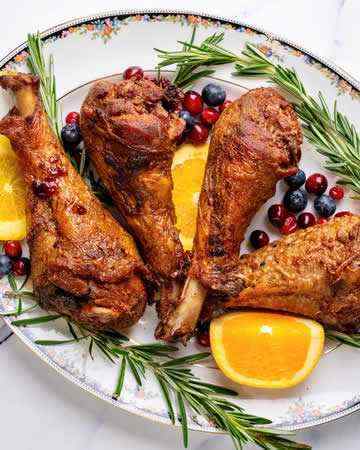 Turkey legs consist of the leg of the turkey from the thigh to the meat just below the knee. Aside from Thanksgiving, this dark, flavourful meat is typically served at fairs and amusement parks on-the-bone to be eaten as a handheld meal. But turkey legs can also be a budget-friendly option for everyday meals.
A turkey leg is technically comprised of the bird’s thigh and the drumstick (the part of the leg below the knee joint), though in many recipes the term is used to refer to just the drumstick. Skin-on and bone-in, a full leg typically weighs between one and two and a half pounds. Like most dark meat, turkey legs are less expensive than white meat turkey breast, which is more popular in the U.S and Canada. Turkey legs are delicious and hearty roasted or grilled, but can also benefit from slow-cooking and braising.
How to Cook Turkey Legs
Roasting, grilling and smoking are the most common methods of cooking turkey legs. For these methods, keep the skin on; this helps keep the meat to stay juicy while being cooked over high heat and the leg’s crispy, salty skin is not to be missed. Pat the legs down with paper towels to remove excess moisture. Coat in fat, like a flavourful compound butter, oil, or ghee and season with salt and other seasonings. For the best flavour, make sure to season the flesh underneath the skin. Cook until the internal temperature reaches 170°F. Turkey legs can be served on-the-bone or sliced.
When braising or slow-cooking — which works particularly well for gamier wild turkey — you can choose to keep the skin or remove it and trim any excess fat. Brown the meat before adding braising liquid or adding it to the slow-cooker. For fall-off-the-bone tenderness, cook anywhere from 2½ hours to overnight in the slow-cooker. Skim any fat from the cooking liquid before serving.