Roasted Turkey with Lemon Herb Butter and Gravy
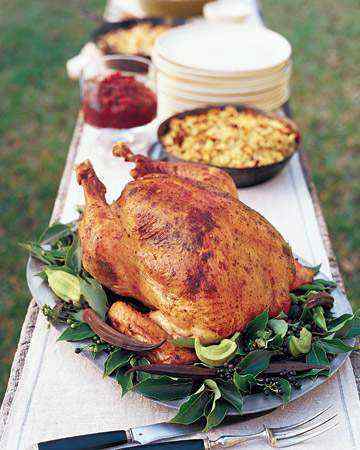 Fresh sage leaves and parsley are tucked beneath the turkey's skin to flavour the meat while it roasts. Chestnut and sausage stuffing is a perfect pairing with this simply seasoned turkey.
1 (18-21 lb) fresh turkey, thawed if frozen, giblets and neck removed from cavity and reserved for gravy
6 Tbsp. butter, softened
1 lemon, freshy zested
3 Tbsp. fresh flat-leaf parsley, finely chopped
3 Tbsp. fresh thyme leaves, finely chopped
3 tsp. coarse salt, plus more for seasoning
1½ tsp. black pepper, freshly cracked
3-4 lemons, each cut into quarters
2-3 onions, each cut into 6 wedges
1 cup dry white wine or water
3 cups turkey or chicken stock
Rinse turkey with cool water, and pat dry with paper towels. Let stand, uncovered, 2 hours at room temperature.
Combine butter, lemon zest, parsley, thyme, 1 tsp. salt, and ¼ tsp. pepper in a small bowl. Using your fingers, gently loosen turkey skin from over the breast meat, and smear half the butter mixture under the skin.
Preheat oven to 450°F (230°C/210°C fan, Gas Mark 8). Place the oven rack on the lowest level.
Place turkey, breast side up, on a roasting rack set in a heavy metal roasting pan. Fold wing tips under. Sprinkle ½ tsp. each salt and pepper inside the cavity. Fill the large cavity and neck cavity loosely with as many lemon and onion wedges as will fit comfortably.
Tie legs together loosely with kitchen twine. Fold the neck flap under, and secure it with toothpicks. Rub the entire turkey with remaining herb butter, and sprinkle with remaining 1½ tsp. salt and ¾ tsp. pepper, pressing to adhere.
Cook for 30 minutes, rotating the pan halfway through. Using a pastry brush, baste the turkey with any pan drippings. Reduce oven temperature to 350°F (180°C/160°C fan, Gas Mark 4), and continue cooking 2 more hours, basting turkey and rotating pan every 30 minutes; if pan gets too full, spoon out some of the juices, reserving them for gravy.
After 2½ hours of cooking, insert an instant-read thermometer into the thickest part of the thigh, avoiding the bone. The temperature should reach 175°F, and the turkey should be golden brown. If the thighs are not yet fully cooked, baste the turkey again, and continue cooking. The thighs should be cooked to an internal temperature of 180°F; to avoid overcooking, remove the turkey from the oven once it reaches 175°F, as it will continue to cook out of the oven. Check again after about twenty minutes, and return to oven if it hasn't reached 180°F.
When fully cooked, transfer the turkey to a serving platter, and let rest, for about 30 minutes. Meanwhile, make the gravy. Pour the pan juices into a large glass measuring cup; let stand until grease rises to the surface, about 10 minutes, then skim with a large spoon.
Meanwhile, place the roasting pan over medium-high heat. Add wine or water, and bring to a boil; deglaze the pan by scraping up any browned bits from the bottom with a wooden spoon. Add stock; stir well, and return to a boil. Cook until reduced by half, about 5 minutes. Add the defatted pan juices, and cook 5 minutes more; you will have about 2 cups. Remove from heat, and season with the salt and pepper. Strain into a warm gravy boat, and serve with turkey.