Coleslaw (South Carolina)
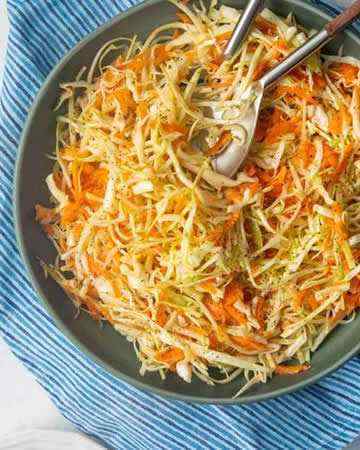 A good Carolina slaw has a sweet and tangy vinegar dressing, not a mayo-based one. This slaw uses apple cider vinegar and two kinds of mustard for extra tang.
½ head cabbage, thinly sliced (about 1 lb)
1 cup carrot, grated
½ cup apple cider vinegar
¼ cup sugar
¼ cup vegetable oil
2 Tbsp. Dijon mustard
2 tsp. dry mustard
1 tsp. celery seeds
1 tsp. kosher salt
½ tsp. black pepper, freshly ground
Place cabbage and carrot in a bowl. Whisk together vinegar, sugar, vegetable oil, Dijon mustard, dry mustard, celery seeds, kosher salt, and freshly ground black pepper in a saucepan until sugar dissolves.
Bring to a boil over medium-high heat.
Pour over cabbage mixture; toss to coat. Serve immediately.
Makes 6 cups.
Frequently Asked Questions:
- Where does the name coleslaw come from? This recipe name originates from the Dutch word”koosla," which translates to English as”cabbage salad." Based on cookbooks and recipe records, Americans have been whipping up some sort of coleslaw stateside since about 1770.
- Is there a difference between coleslaw and slaw? Since the”cole" in slaw refers to cabbage, that gives you a major clue. Coleslaws all feature some cabbage family member, be it Napa cabbage, red cabbage, savoy cabbage, or bok choy. Slaws, sans-"cole," can be made with any other crunchy vegetable, such as snow peas or shredded broccoli stems, Brussels sprouts, beets, jicama, or carrots.