Sauce Béarnaise (Hollandaise, Vinegar, Shallots, Tarragon, Peppercorns)
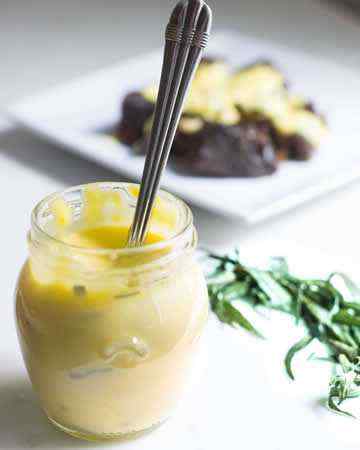 This 2nd generation mother sauce derives from Sauce Hollandaise. Rich, buttery, tarragon-flavoured Béarnaise is the easiest elegant steak sauce to make at home. Béarnaise is made with a strained reduction of vinegar, shallots, fresh tarragon and crushed peppercorns as a replacement for the lemon juice in Hollandaise. Béarnaise is a classic accompaniment to steak frites, and works well with tender cuts like filet mignon or fattier rib-eyes. It’s also delicious with eggs, fish, or drizzled over vegetables such as steamed asparagus or boiled new potatoes. The eggs are the most critical component, the yolks should be orange in colour, not a pale yellow (which suggests the hens were poorly fed and/or given chemicals). Using healthy eggs will ensure the best flavour. Of equal importance is the tarragon, it should be fresh, and not dried. If unavailable, use jarred tarragon packed in vinegar.
1 Tbsp. white wine or champagne vinegar (15 g)
¼ cup dry white wine (60 g)
2 Tbsp. fresh tarragon, minced, divided (5.3 g)
1 Tbsp. shallots or onions, minced (10 g)
3 egg yolks
1 Tbsp. water, cold
½ cup butter, melted (113 g)
¼ tsp. sea salt
¼ tsp. white peppercorns, freshly ground
In a small saucepan, add the white wine vinegar, white wine, 1 Tbsp. of minced tarragon, and the minced shallot. Cook over medium-low heat until you're left with just 1 Tbsp. of liquid in the pan. Let this mixture completely cool.
In a medium bowl set over a small saucepan filled with gently simmering water (set over low heat), add the tarragon-vinegar reduction along with the egg yolks and 1 Tbsp. of cold water. You can either strain the reduction for a smoother sauce, or simply combine it as is with the egg yolks and water. Constantly whisk the mixture together until it's thick enough to look like runny pudding.
Pour the melted butter, 1 Tbsp. at a time, into the mixture. Whisk the mixture well after each addition (basically, pouring the butter should NOT be a gradual stream but rather a drop by drop process). Once combined, whisk in kosher salt and freshly ground pepper. Taste test for seasoning add more salt or pepper, if desired. The final sauce should be thick like mayonnaise, but still stream off your spoon in a very slow and steady manner. Stir in the remaining Tbsp. of tarragon. Serve lukewarm.
Makes about 1 cup.
If You Can't Serve Right Away:
Keep warm over a double boiler (ban-marie) until ready to serve. The best holding temperature is about 145°F (63°C). This temperature both discourages the growth of bacteria and is hot enough to keep the fat in your Hollandaise from solidifying. For both food safety and quality control, Hollandaise should not be held any longer than two hours.
How to Fix a Broken or Curdled Hollandaise:
If your Hollandaise breaks or curdles, it’s salvageable. Pass through a chinois (fine mesh seive) to strain out any curdled portions of the Hollandaise. Make sure to keep the whole strained portion of the sauce warm. Add 1 yolk plus 1 Tbsp. of warm water to a new stainless-steel mixing bowl and whisk in your strained Hollandaise. Voila!
Consistency Issues:
If your sauce is too thick, you can stream in a little warm water (a drop at a time) to loosen it up.
If your sauce is too thin, take a clean bowl and set it over a small saucepan with gently simmering water. Whisk an egg yolk with a drop of cold water in this clean bowl. Very slowly add your sauce, drop by drop (like you did with the melted butter), into the egg mixture and continue stirring until it thickens up to your desired consistency.
If you start getting some slight clumps, you may be able to fix the sauce by quickly moving the bowl over to an ice bath to stop the cooking. Then you can vigorously whisk the clumps out. If it's not working, it's best to start over.