Steamed Fish in Banana Leaves (Laotian Mok Pa)
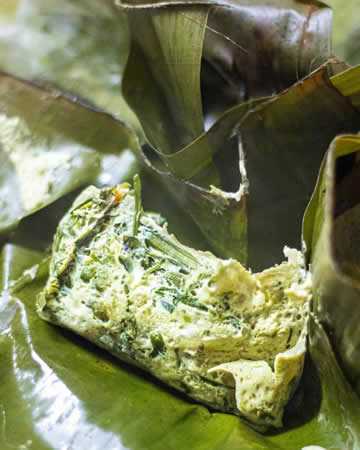 Mok Pa is a popular steamed fish parcel from Laos made from white fish, herbs and seasonings, along with whole sticky rice grains or toasted sticky rice powder. The mixture is portioned out and wrapped up in parcels made from fresh banana leaves, before being steam cooked to perfection. While Chinese steamed fish recipes consist of a whole fish or fish fillet bathed in a fragrant sauce, Lao fish parcels are a little different. Here, the fish fillets are first diced, then mixed with the herbs and seasonings. There's no soy sauce, sesame oil or rice wine used in this recipe. Infused with fresh, aromatic herbs and tender white fish, this melt-in-your-mouth Lao Steamed Fish (Mok Pa) is sure to impress. Pair them with rice and steamed greens for a satisfying and healthy meal.
white fish, diced (200 g)
lemongrass (2"/5 cm), sliced and chopped small
2 kaffir lime leaves, finely sliced
2-3 cloves garlic, chopped
2 shallots, chopped
galangal (0.4"/1 cm) chopped, fresh or sub with ginger
1 birds eye chilli
1 tsp. sticky rice powder or glutinous rice flour
1 Tbsp. padaek (Lao fish sauce) sub with normal fish sauce or anchovy paste
1 egg
½ cup fresh dill, chopped
1-2 green onions, chopped
handful Thai basil leaves
8 sheets banana leaf or baking paper Optional: additional 4 banana leaf strips (approx 30x4 cm / 11x1.5") to reinforce the parcels
Special Equipment:
bamboo toothpicks or skewers, to seal the parcels
steamer
For the Fish Filling:
Place the chopped lemongrass, kaffir lime leaves, garlic, onions, galangal, and chilli in a mortar and pestle and crush into a smooth paste.
Meanwhile, place fish into a mixing bowl. Add the herb paste, sticky rice powder, fish sauce (or padaek) and egg. Mix well.
Add the dill, spring onion and basil. Continue to mix until well combined.
To Fold the Banana Leaf Parcels:
Lay out two square pieces of banana leaf per fish parcel (outer leaf veins running horizontally, inner leaf veins running vertically on top).
Place a ladle full of mixed fish and herbs in the centre.
Fold the bottom edge of wrappers up to meet the top edge.
Pinch the top and fold the left side in, then wrap the triangular shaped edges around the main parcel. Repeat for the right side.
(Optional) Wrap an extra strip of banana leaf (approximately 30x4 cm/11x1.5") around the bottom of the wrapper to strengthen the parcel.
Pin the tops together with a bamboo toothpick or skewer.
To Cook:
Place parcels into a steamer. Cover and steam for 30 minutes.
Serve with sticky rice.
Makes 4 parcels.
Cook's Notes:
Fresh Fish - Since Laos is a land-locked country, Mok Pa is traditionally made with fresh-water fish, such as tilapia, from the Mekong River. You can use any white-fleshed fish that’s easy for you to source, such as snapper, barramundi, basa, cod, fluke or flounder. Avoid oily fish like bluefish, mackerel or swordfish. Tip: Make sure it's properly filleted to avoid bones popping up in the final dish.
Fresh Herbs - You'll need lemongrass, kaffir lime leaves, garlic, galangal (or sub with ginger) shallots, chilli, dill and spring onion. If needed, use jarred or frozen lemongrass and kaffir lime leaves.
Sticky Rice Powder - This is the 'glue' that holds the cooked fish together. Make your own sticky rice powder at home, or look for it in the dried spices section at your nearest Asian grocer, or buy sticky rice powder online. Substitute with a handful of whole, uncooked sticky rice (mixed well through the mixture) or cornstarch if necessary (this will help give you the right texture if not the added flavour).
Fish Sauce - Traditionally, this recipe calls for Laos' padaek fermented fish paste. Sub with regular fish sauce or anchovy paste if needed.
Banana Leaves - Fresh banana leaves are a great, environmentally-friendly container to steam your fish in. They also give a unique aroma to the dish. Look for fresh or frozen leaves at Asian or Latin American markets, and always wash and pat dry the leaves before use. If you can’t find banana leaves, substitute with baking paper or aluminium foil.
Soften Fresh Banana Leaves - This makes them pliable and easy to fold. Hold each piece briefly over an open flame until it becomes a shiny bright green colour and releases the moisture in the leaves.
If Using Frozen Banana Leaves - Layer them on a sheet of aluminium foil for a better seal, as they can easily their structure after being frozen and thawed.
Layering the Leaves - Use two layers of banana leaf, with the outer layer placed 'horizontally' (according to the leaf grain) and the inner placed 'vertically'. This not only looks good but helps to lock in all those delicious flavours.
If You’re Feeling Lazy - Use a blender or food processor instead of a mortar and pestle to make the herb paste. Note: this will change the flavour due to 'cutting' instead of ‘bruising’ the aromatics. If you're fine with that, then go for it.
To Cook - Use a steamer, bamboo steamer, or a wok with a rack and lid.
To Eat - Serve with sticky rice, and use a small ball of rice to scoop up a portion of fish to eat. Or simply serve on top of fluffy white rice with steamed broccoli or Asian greens.
Make Stuffed Capsicum / Bell Peppers - If you can't (or don't want to) source banana leaves, stuff the mixture into capsicums / bell peppers instead. Easy, tasty, and just as environmentally friendly.
Swap the Proteins - Try it with finely chopped chicken, pork or tofu.
Adjust the Spice Level - Keep the chilli seeds in for a spicier experience, or scrape them out to temper the heat.
Nutrition:
Calories: 91kcal | Carbohydrates: 6g | Protein: 13g | Fat: 2g | Saturated Fat: 1g | Cholesterol: 66mg | Sodium: 402mg | Potassium: 310mg | Fiber: 1g | Sugar: 2g | Vitamin A: 650IU | Vitamin C: 23mg | Calcium: 31mg | Iron: 1mg