Crab
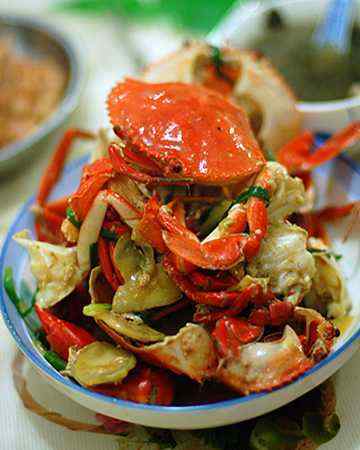 Crabs make up 20% of all marine crustaceans caught, farmed, and consumed worldwide, amounting to 1½ million tonnes annually. One species, Portunus trituberculatus, accounts for one fifth of that total. Other commercially important taxa include Portunus pelagicus, several species in the genus Chionoecetes, the blue crab (Callinectes sapidus), Charybdis spp., Cancer pagurus, the Dungeness crab (Metacarcinus magister) and Scylla serrata, each of which yields more than 20,000 tonnes annually.
In some species, crab meat is harvested by manually twisting and pulling off one or both claws and returning the live crab to the water in the belief the crab will survive and regenerate the claws thereby making it a sustainable industry.
Crabs are prepared and eaten as a dish in several different ways all over the world. Some species are eaten whole, including the shell, such as soft-shell crab; with other species just the claws and/or legs are eaten. The latter is particularly common for larger crabs, such as the snow crab. Mostly in East Asian cultures, the roe of the female crab is also eaten, which usually appears orange or yellow in colour in fertile crabs.
The biggest importers, and therefore countries where eating crab is immensely popular, are Japan, France, Spain, Hong Kong, the US, Canada and Portugal.