Fish Stock
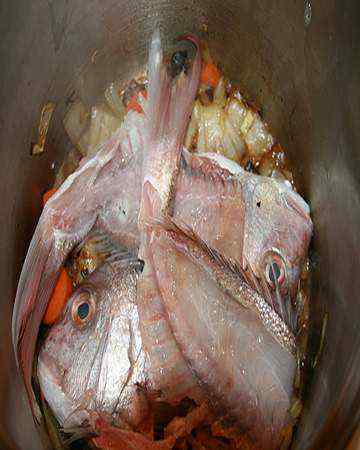 This recipe is a foundation for a great deal of advanced fish cookery, but making fish broth is pretty simple. The biggest difference between fish broth and other broths is time: Fish broths do not need hours and hours to come together the way beef or chicken broths do. Use lean fish like bass or cod - avoid oily fish like salmon or mackerel.
3 Tbsp. extra-virgin olive oil
3 lbs fish spines, fins and heads
½ large parsnip root, sliced into rounds
1 leek, sliced thin
2 ribs celery, sliced
1 carrot, sliced into rounds
1 bulb fennel, trimmings
½ cup button mushrooms, sliced
½ bunch parsley
1 (1”) piece ginger, peeled and sliced thin
2 bay leaves
1 clove garlic, smashed
1 sprig fresh thyme or 1 tsp. dried
1 cup dry white wine, such as a Pinot Grigio
water, cold
sea salt
Wash bones and heads well under cold water. If the gills are still attached, cut them out. They impart a bitter flavour you do not want.
Heat a large pan for 2 minutes on high heat, then add the oil. Turn the heat down to medium and add the fish bones. You do not want them to brown, only to get a little colour. Cook, stirring frequently, for about 5 minutes. Remove and set aside.
In a tall soup pot, add the wine and reduce it by half under high heat. Once this is done, add the fish bones and turn off the heat for now.
In the pan you sweated the fish bones in, add the vegetables and cook until the leeks are translucent. Stir frequently. When they are cooked but not browned (a little browning is OK), add them to the soup pot.
Add the herbs to the soup pot, stir everything to combine, and add enough cold water to cover it all by an inch.
Bring the broth up to a simmer. Do not let it boil. It is important that you don't let it boil, because fish broth will get cloudy in a hurry if you do. Look for a shimmer on the surface, not burble. If you have a thermometer you want something between 170-180°F.
Once the broth is at a simmer, move the pot off to one side of the burner a little. This will direct any impurities to one side, making it easier to skim. Simmer like this for 40 minutes.
After 40 minutes, strain the broth through a fine mesh strainer with a piece of cheesecloth set inside. Clean the soup pot and then return the broth to the now-clean pot. Taste it. Now is the time to add salt. Add enough to suit your taste.
Pour into quart jars and freeze. Make sure you leave enough space at the top of the jars to account for the broth expanding when it freezes!
Cook's Notes:
- Traditional Fish Broth and Strong Fish Broth (provided the Strong Fish Broth is not made with nontraditional fish like salmon or bluefish), can be used interchangeably in chowder.
- Strong Fish Broth is preferable for fish chowder and Traditional Fish Broth is preferable for chowders that use shellfish or a mixture of different seafood.
- The milder Traditional Fish Broth lets the shellfish flavours come through more clearly.
- Once it's finished, this broth freezes well for up to three months, and remains usable for up to six months