Braised Oxtails
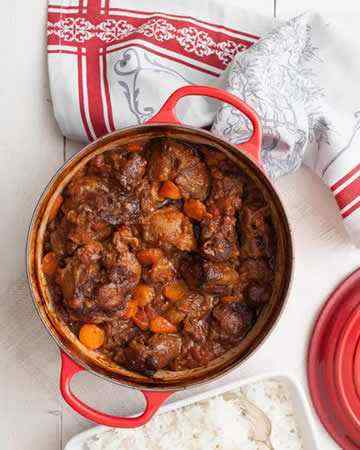 Contrary to their name, nowadays oxtails do not come from oxen as they did in the past. They are actually the tail of the common cow and are one of the most flavourful beef cuts you can purchase and cook. However, it takes some time to coax the best flavour and texture out of oxtails because the cut can be a little tough. Slow cooking and steady heat is the best approach to tenderize the multiple connective tissues in the tail; stove, slow cooker, or oven can yield amazing results as long as you give the meat enough time to soften up, soak up the flavours, and fall off the bone.
Long braising the tail makes it so tender that it's the method of choice for many home cooks and expert chefs. It also happens to create its own rich stock as the tail cooks, which is delicious on rice or mashed potatoes. Although oxtail preparations typically stem from sustenance days of eating when no parts of the animal went to waste, lately, and ironically, this cut of meat has gained favour and has become a more expensive item to purchase. You'll find oxtail dishes in Italian, Russian, and British cuisines, as well as Asian, African, Jamaican, and Spanish. Regardless of the cuisine in question, braised oxtail is a rewarding, comforting dish with a deep, rich flavour, especially as the weather turns a bit colder.
3 lbs oxtails, cut into 2" thick cross sections
sea salt
black pepper, freshly ground
all-purpose flour, unbleached, for dusting
¼ cup vegetable oil, divided
1 small yellow onion, finely diced (1½ cups)
2 medium stalks celery, thinly sliced (½ cup)
2 small carrots, peeled and finely diced (⅓ cup)
2 cloves garlic, minced
1¼ tsp. brown sugar
1¼ tsp. jerk seasoning
¼ tsp. ground ginger
1 bay leaf
1 star anise
pinch ground cloves
1 cup dry red wine
1½ cups beef stock
To Serve:
cooked white rice or rice and beans
Pat the oxtails dry with paper towels, season with salt and pepper, and dust the pieces all over with flour. In a Dutch oven set over medium-high heat, add 2 Tbsp. of oil. When the oil is hot, add the oxtails, working in batches as needed to avoid crowding. Let cook, turning occasionally, until deeply seared on all sides, 15-18 minutes total.
Transfer the meat to a large platter; drain and discard any excess fat from the pan (do not wash the pan). Return the pan to the stove and add the remaining 2 Tbsp. of oil. When the oil is hot, add the onion, celery, and carrots, and cook, stirring occasionally, until the vegetables are soft but not yet coloured, 4-5 minutes. Add the garlic, brown sugar, jerk seasoning, ginger, bay leaf, anise, cloves, and wine and stir, scraping the bottom of the pot with a wooden spoon to deglaze. Bring to a simmer and cook until the wine has reduced slightly, 5-7 minutes. Add the stock, bring to a simmer, cover, and cook, skimming the grease and gently stirring occasionally, until the meat is very tender, 8-9 hours. Adjust the seasoning with salt and pepper to taste.
Serve hot, with white rice or rice and beans.
Why Is Oxtail So Expensive?
The meat one can obtain from a cow and all its cuts is plentiful, but retrieving the meat from the tail requires time and skill, and what you get is barely a few lbs. Thus, the price. Although back in the day, tail was eaten as a way of utilizing the entire animal, in what is known today as "nose to tail" eating, oxtail is now a commodity. As the oxtail craze took over high-end restaurants, the spike in price at butchers and grocery stores was the obvious consequence.
For a Succulent Oxtail Dish:
Trim off any excess fat and pat the meat dry with paper towels before you sear it. This will help you get a nice brown crust on the meat.
Oven braising is best because the meat is cooked with indirect heat. But if you don't have an oven-safe pot, you can braise on the stovetop over low heat. Just check periodically to make sure the liquid is simmering, and not boiling.
How to Store Braised Oxtails:
While cooling and storing braised oxtail, it's best to leave the meat in the braising liquid so that it doesn't dry out. Keep it covered in the refrigerator for three to four days, and reheat in a saucepan over medium heat until it's hot all the way through.