Chicken In Wine (French Coq au Vin)
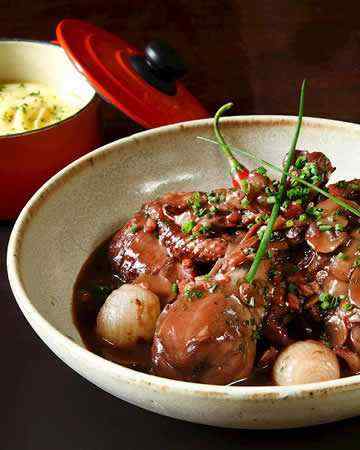 Combining a rich dark sauce with flavourful onions, lardons, mushrooms, and tender browned pieces of rooster meat, coq au vin is a great make-ahead meal perfect for entertaining, as it can be simply reheated before serving. This crowd-pleaser also lends itself easily to large parties, as the recipe can be easily doubled or tripled. Coq au vin is even better the day after it is made, as all the ingredients will have had time to steep overnight. According to the traditional recipe, coq au vin is prepared using rooster meat which is gamey and tough when compared to younger chicken meat predominantly sold in stores today. The sauce is made with a whole bottle of red Burgundy wine, which is thickened with rooster's blood near the end of cooking. Mushrooms and onions are typically cooked separately and added either near the end of cooking or once the dish is cooked to avoid overcooking. Regional variations differ in the type of wine used. Even though both dishes often include morels and cream, coq au vin jaune from the Jura region is made with vin jaune, a type of white wine, while Riesling wine is the wine of choice for the Alsatian coq au Riesling. Coq au pourpre or coq au violet is made with Beaujolais nouveau wine which is produced from Gamay grapes, and there is even coq au Champagne from the namesake Champagne region. Auvergne region boasts with their coq au vin de Chanturgue, a variety made with local Chanturgue wine that is produced in a small, 15-acre, and vineyard located near Clermont-Ferrand.
The exact origins of coq au vin are unknown. It is almost impossible to find the origin of this recipe - the concept of braising chicken in wine is a simple one, and many different iterations of this recipe can be found all across Europe. Allegedly, among the first to enjoy coq au vin was Julius Caesar during the Gallic Wars. According to this legend, the local Gauls sent Caesar a rooster, a symbol of their bravery, in an attempt to demoralize him. In turn, he sent them an invitation to a dinner where they would be served their rooster cooked in herbs and wine. King Henry IV of France is another historical figure linked with coq au vin. Some believe that the beginnings of this dish can be found in his famous saying, "a chicken in every pot," which was a promise of prosperity, meaning that every peasant during his reign would eat chicken at least on Sundays. However, the first recipe resembling modern coq au vin is found as late as 1864 in a cookbook called Cookery for English Households, which contains a recipe for poulet au vin blanc that is almost identical to modern coq au vin, though using white wine instead of red. Interestingly, earlier recipes favoured white wine instead of red. Coq au vin became extremely popular in the United States in the 1960s thanks to Julia Child who through her cooking show The French Chef introduced Americans to the classics of French cuisine.
1 (4.5 lbs) rooster or hen, cut-up in pieces (2 kg)
12 small white onions
¼ lb (4 oz) lardons (125 g)
1 Tbsp. extra-virgin olive oil
4 oz butter, divided (120 g)
¼ cup (4 Tbsp.) cognac (60 g)
1 bottle red wine (750 mL)
1 Bouquet Garni
2 cloves garlic
7 oz champignons (200 g)
1 Tbsp. all-purpose flour, unbleached
3 Tbsp. chicken or pork blood
sea salt
black pepper, freshly ground
Steamed Apple To Serve:
1 large apple, thinly sliced
1 Tbsp. butter
1 Tbsp. sugar
¼ tsp. ground cinnamon
Season the poultry with salt and pepper, peel and dice the onions, then blanch the lardons to remove excess salt. Sauté lardons and onions in oil and 60 g of butter until browned. Drain and remove the onions and lardons, then brown the poultry pieces in the same pan.
Add the onions and the lardons to the poultry and stir. Heat a Tbsp. of cognac, then pour it into the pot and set on fire to flambé.
Slowly pour the wine into the pot, then add bouquet garni together with peeled and crushed garlic cloves. Bring to a boil over moderate heat, then lower the heat and simmer for at least an hour, stirring occasionally.
Clean and slice the mushrooms. Sauté them in 30 g of butter, then add them to the pot with poultry which has been simmering for an hour. Cook for another 20-25 minutes.
Ten minutes before serving, gradually add a mixture of flour, the remaining butter and hot gravy into the pot, then stir for 5 minutes. Lastly, add the blood and cook over low heat for 4-5 minutes until the sauce thickens.
For the Steamed Apple:
In a small saucepan, melt the butter. Add the apple slices, sugar and cinnamon. Cook, stirring as needed, until soft, about 5 minutes.
Serve the dish hot, alongside steamed apples.
Makes 6 servings.
Cook’s Notes:
- Method: Marinating for 24 hours is crucial if you’re using rooster meat, as it helps to tenderize it, but you can skip this step altogether if you’re using young hens. A flambé with either brandy or cognac is also crucial as it makes the meat stay together and not fall off the bone once cooked. Onions, mushrooms, and lardons are typically cooked separately, with mushrooms and onions added to the meat near the end of cooking, or once the dish is cooked, to avoid overcooking. The length of cooking depends on the meat you use, the older the hen, the more cooking it will need to soften. As stated earlier, in any case, use chicken legs and thighs and avoid chicken breast, as they turn stringy and dry with prolonged cooking. If you can, always choose lardons, a solid pork fat that is salt-cured. Some recipes will blanch them before use to eliminate excess salt. However, if you must use bacon, always blanch it before use to remove the smoky flavour, as well as any possible extra salt, so that it does not overpower the dish. Besides cooking coq au vin on the stove, it can also be cooked in the oven. Once you've prepared all the ingredients, place them a Dutch oven, cover with a tight-fitting lid, and simmer in the oven until cooked.
- Blood: The traditional coq au vin recipe uses rooster’s blood as a thickener for the sauce. To substitute, you can use pig, duck, or goose blood. The blood is always added at the end of cooking and is often stabilized with brandy and vinegar to prevent clotting.
- Sauce and Seasoning: For a proper coq au vin the sauce must be silky and glossy, which is chiefly the result of rooster use, which is the kind of meat that benefits from long braising, as long cooking helps tenderize it and release all the collagen. However, a rooster these days may be harder to find, but whether you use a rooster or a younger hen, opt for chicken thighs and legs which are more collagen-rich and require longer cooking than chicken breast. Also, if you'd like to advance the thickness of the sauce, you can use any of the following: chicken feet, a collagen-rich veal stock, or gelatin powder. Once the sauce has reduced, whisk in some butter and or beurre manie, a mixture of butter and flour.
- Salt: Because lardons are salty, plus because the sauce will reduce during cooking, you should take extra care not to over season with salt. Some recipes even blanch the lardons or bacon before use to reduce the saltiness and remove any smoky flavour.
- Wine: If you ask the French, the wine of choice for coq au vin is always red Burgundy wine, namely Pinot Noir. Other possible substitutes, however, include Beaujolais from the same region or Cabernet Sauvignon. In any case, avoid those labeled as cooking wine, and choose only good drinking red wines.
- Storage and Serving: Coq au vin is one of those dishes that gets better with time, as it develops more depth of flavour after a few days in the fridge. It is great to make ahead and tastes even better when reheated. Serve it with flat and wide noodles or steamed potatoes.