Easter Pie (Ligurian Torta Pasqualina)
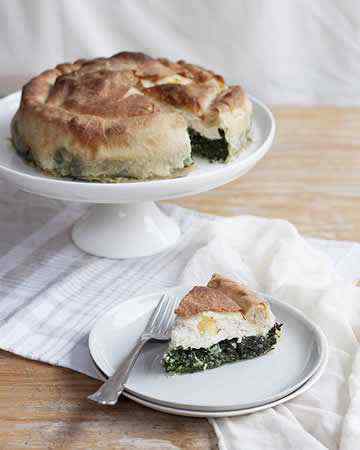 This torta pasqualina or Easter pie (pasqua means 'Easter' in Italian), made with fine layers of dough and filled with chard, eggs and ricotta, is one of Liguria's iconic dishes (next to pesto of course). This recipe has roots that can be traced back to the fifteenth or sixteenth century. Made with the season's best offerings - fresh herbs, green vegetables such as chard (or artichokes or even foraged wild greens - a version that is particular to the town of Ventimiglia on the far west of the region) and plenty of eggs. The dough is similar to that of Liguria's paper-thin focaccia di recco, made of just flour, water and a touch of olive oil, it is rolled and stretched until almost transparent then layered to create the base and the top. The original torta pasqualina, it is said, called for 33 layers of dough to represent the 33 years of Christ - most recipes today will call for a total of four, two on the bottom and two on top, for a lovely flaky crust but one that's easier to make at home. It may look daunting - the layers of dough, the layers of filling, the yolks cracked into the top, the number of steps. But it's actually a rather simple preparation and doesn't take long. Also all the elements of this dish can be prepared ahead and then it's just assembling before going in the oven that takes a bit of patience.
Pastry:
bakers or bread flour, a strong flour gives elasticity to this very thin dough (500 g)
1 tsp. sea salt
2 Tbsp. extra-virgin olive oil
1¼ cups water (310 mL)
Filling:
½ medium brown onion, finely chopped
2 lbs silverbeet (chard), central veins removed and leaves blanched (1 kg)
handful fresh marjoram leaves
1½ cups ricotta (350 g)
8 eggs
1 cup Parmesan cheese, freshly grated (120 g)
pinch ground nutmeg
sea salt
black pepper, freshly ground
For the Pastry:
Place the flour, salt and oil in a bowl and add water, little by little until you have a dough that is neither dry nor sticky. You may need to add a bit more water, you may not need it all, so I suggest doing this by hand or at least adding the water bit by bit so you can see how the dough behaves.
Once it comes together into a dough, knead it on a lightly floured surface about 5-10 minutes, or until the dough is smooth and elastic (it should bounce back when poked). Wrap in plastic wrap and let rest for at least 1 hour (you can also prepare this the night before and leave it overnight in the fridge).
For the Filling:
Cook the silverbeet (chard) until tender, about 5-7 minutes. Remove from the water, drain, let cool slightly then chop finely. Squeeze again to remove as much water as possible.
In a large pan, sauté the onion in 2 Tbsp. olive oil until soft and translucent. Add the spinach and toss to combine with the onion, cooking a further 2 minutes. Season with salt and pepper, add the fresh marjoram leaves and set aside to cool. When cool, combine 2 beaten eggs and a third of the Parmesan with the chard mixture and set aside until needed.
In a bowl, combine the ricotta, 2 eggs, a third of the Parmesan, nutmeg and season with salt and pepper. Beat until well combined. Set aside in the fridge until needed.
Assemble the Pie:
Brush olive oil lightly over a cake tin with a removable base (about 23-25 cm diameter is fine but larger sizes work too). Cut the dough into 4 equal portions. Roll one out at a time, keeping the others well covered with a tea towel or plastic wrap. On a large, lightly floured surface, roll the first ball of dough until very thin. You may even need to pick it up and stretch it between your hands, gently - you should be able to see your fingers through the other side.
Lay the dough gently over the cake tin to cover the sides and base. Let the excess dough hang over the edge. Brush the dough lightly with olive oil. Roll out a second ball of dough as before and lay over the first layer of dough the same way. Brush with olive oil, pushing out any air bubbles with the brush as you do so.
Fill the pie base with the chard mixture, smoothing over the top with the back of a spoon. Next, layer over the ricotta mixture, smoothing over the top with the back of a spoon. Then, with the help of a spoon, make four round indents over the surface of the ricotta to fit 4 egg yolks. Crack the eggs, separating the whites from the yolks. Place the yolks in the indents in the ricotta and the whites in a small bowl. Whisk the whites together with a fork and pour over about half of the whites to make an even layer that just covers the ricotta. Sprinkle over the rest of the Parmesan.
Roll out the third ball of dough as before. Gently lay it over the top of the pie and brush lightly with olive oil. Roll out the last ball of dough and lay it over the top. Trim the dough overhang, leaving about an" (2½ cm) from the edge of the top of the pie, and roll the trim down until it reaches the top of the pie. Brush the top with olive oil and then bake for about 50 minutes at 180°C.
Serve warm or even cold - this also makes a great portable picnic dish.
Cook's Notes: Make sure the greens are well-drained and squeezed - too much water can make the base excessively soggy. Also, it helps to make sure you have an oven that bakes well from the bottom. If you're not sure or you suspect it doesn't, you may want to start baking on the lower shelf and move it up a shelf about halfway through baking. It's also a good idea to let the tart sit for about 20 minutes before slicing into it to allow all the juices to settle a bit.