Leeks
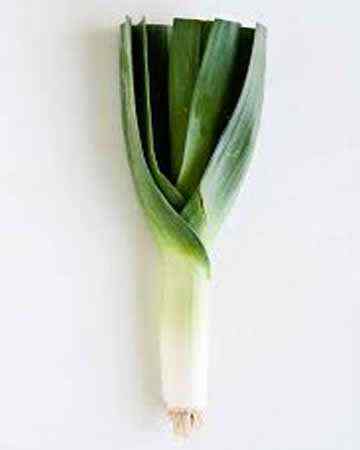 Health Benefits: Leeks contain many noteworthy flavonoid anti-oxidants, minerals, and vitamins that have proven health benefits. Leeks are low in calories. 100 g fresh stalks contain 61 calories. Further, their elongated stalks provide good amounts of soluble and insoluble fiber. Though leeks contain proportionately less thio-sulfinites than that in garlic, they still possess significant amounts of these anti-oxidants such as diallyl disulfide, diallyl trisulfide and allyl propyl disulfide. The compounds convert to allicin by enzymatic reaction when the leek-stalk disturbed (crushing, cutting, etc). The total measured anti-oxidant strength (ORAC value) of 100 g leek is 490 TE (Trolex Equivalents). Laboratory studies show that allicin reduces cholesterol production by inhibiting the HMG-CoA reductase enzyme in the liver cells. Further, it also found to have anti-bacterial, anti-viral and anti-fungal activities.
Additionally, allicin decreases blood vessel stiffness by release of nitric oxide (NO) and, thereby bring a reduction in the total blood pressure. It also blocks platelet clot formation and has fibrinolytic action in the blood vessels, which helps decrease an overall risk of coronary artery disease (CAD), peripheral vascular diseases (PVD), and stroke.
Leeks are a great source of minerals and vitamins that are essential for optimum health. Their leafy stems indeed contain several vital vitamins such as pyridoxine, folic acid, niacin, riboflavin, and thiamin in healthy proportions. 100 g fresh stalks provide 64 µg of folates. Folic acid is essential for DNA synthesis and cell division. Their adequate levels in the diet during pregnancy can help prevent neural tube defects in the newborn babies.
In addition, leeks are one of the good sources of vitamin-A (1667 IU or 55% of RDA per 100 g) and other flavonoid phenolic anti-oxidants such as carotenes, xanthin, and lutein. They also have some other essential vitamins such as vitamin C, K, and vitamin E. Vitamin C helps the human body develop resistance against infectious agents and scavenge harmful, pro-inflammatory free radicals. Further, its stalks have small amounts of minerals such as potassium, iron, calcium, magnesium, manganese, zinc, and selenium.
How to Select: Leek tops should be dark green and fresh, not limp or dried out. The bulb ends should have fringes of small crisp-looking roots still attached; avoid split or soft bulbs, or those with large blemishes.
How to Store: Refrigerate leeks up to one week, loosely wrapped in plastic. Wait to trim the tops and roots until just before use.
How to Use: Leeks can replace onions in soups, stews, and sautes. They are also wonderful on their own, steamed, sauteed, grilled, roasted, or broiled. Before using, it is essential to clean them well, as dirt, sand, and grit can collect between the layers.
How to Clean: Leeks can be extremely dirty and are best cleaned after they've been trimmed and cut. Soak cut leeks in a bowl of cool water; lift them out, replace water, and repeat until no grit remains at the bottom of bowl.