Caramelized Onions
Caramelized onions are good on pretty much everything. The only problem? They're surprisingly tricky to make. They take time to slowly brown and caramelize. It's easy to burn them - and it's easy to remove them from the stove before they're actually done. When caramelizing onions, there is a right colour for the right job - you just have to learn how far to take 'em. No matter if you're using yellow, white, or sweet onions, be sure to use a large, wide pot or skillet: This will help the water evaporate so the slices caramelize instead of steam. Cook them in a neutral oil like grapeseed (butter will burn) over medium-low heat, season with salt, and stir occasionally. If done properly (read: slowly), you shouldn't need to add any water. But if you notice some sticking or premature browning, add a splash or two of water. Oh, and remember: This is not a quick process. Onions can take anywhere from 45-60 minutes to properly caramelize.
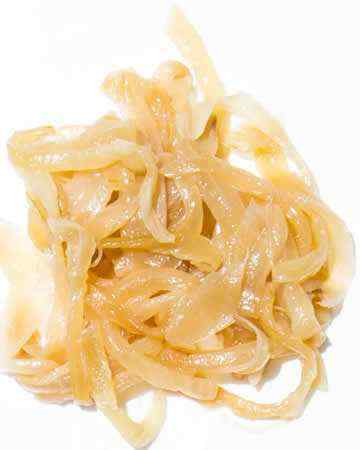 Blonde: Ideal for French soup, these cappuccino-colored onions should still have a bit of bite.
 Golden Brown: Go a stretch longer to get them a little more, well, caramel-colored; great for onion jam.
 Deep Golden Brown: Patience will net you a tangle of these nearly crisped onions - our preferred burger topping.
6 Tbsp. unsalted butter
15 medium yellow onions (6 lbs), halved lengthwise and sliced ¼" thick
2 tsp. coarse salt or 1 tsp. table salt
1 Tbsp. sugar
In an 8 qt Dutch oven or heavy pot, melt butter over medium-high. Add onions and salt. Cook, stirring often, until softened and just beginning to brown, 35 minutes.
Reduce heat to medium. Add sugar and cook, stirring often to scrape up any browned bits stuck to bottom of pot, 35-40 minutes (lower heat if bottom of pot begins to scorch).
When done, onions should be deep golden brown and have a jam-like consistency. Remove from heat; season with salt. Let cool completely.
Makes 4 servings.
Cook’s Note:
Slicing Them Too Thinly:
Thinly sliced onions will burn faster and stick to the bottom of your pan. Aim to slice your onions 1/8" thick - their heft will prevent them from drying out.
Using Just Butter:
You definitely want the flavour of butter in your onions - but butter has the tendency to burn. For insurance, use a combination of butter and oil, which has a higher smoking point. But how much do you use? Depending on the consistency you want your onions, you can use more or less fat. Just cover the bottom of your pan for jammy, soft caramelized onions, or add a little more for more structured, slightly charred caramelized onions. The more fat in the pan, the more the onions will fry rather than soften. (Okay, you can fry them a little.) You can use just oil, or a combination of butter and oil - the choice is yours.
Crowding the Pan:
If you pack too many onions into your pan, they'll steam and produce water. Eventually, they will caramelize - but it will take much longer to get them there. In a 12" pan, you'll ideally be able to cook 2 large onions (we like yellow or Spanish onions) without encountering any steaming problems.
Cranking the Heat:
You're not sautéing your onions - you're trying to slowly coax flavour out of them. It takes time, probably a solid 45 minutes, for the onions' sugars to caramelize. If your heat is too high, the onions will burn. Heat your pan over medium-low, then add your onions. Keep it on that temp for the whole process. No cheating.
Skipping the Deglazing Step:
There's flavour in the bottom of the pan, too. Take full advantage of the brown bits and deglaze with stock, wine, beer, vinegar, or even water - whichever liquid matches the dish you're going to be adding your onions to. Stir to incorporate with the onions, and they'll absorb all that flavourful liquid, making them EVEN BETTER.
Removing Them Too Early:
Caramelization takes time. Don't take them off too early - then, you're "blonding" them instead of actually caramelizing them. They should be a rich brown, much reduced from where you started, and very soft but not quite mushy.