Roasted Salmon with Maple Mustard Glaze (From Frozen)
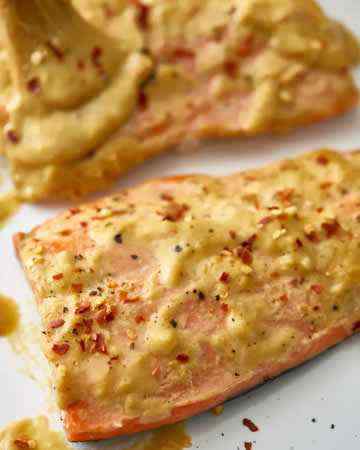 When we're having salmon for dinner, I have to remember to pull the frozen fillets from the freezer that morning and tuck them into the fridge to thaw peacefully. But life is hectic and more of my mornings are harried than those occasional thoughtful ones, and I find myself at 6 pm on Wednesday staring at rock-hard fillets and a hungry family to feed. Luckily, it is perfectly safe to cook salmon from a frozen state and, let me assuage any worries right now, it can taste as delicious as properly thawed and cooked salmon too. I've found the secret is to use the power of a hot oven, a little foil, and a flavourful sauce to get you from frozen to dinner in 30 minutes.
2 (6 oz) frozen salmon fillets (do not thaw)
4 Tbsp. Dijon mustard
1 Tbsp. pure maple syrup
4 large cloves garlic, minced
½ tsp. red pepper flakes (optional)
1 tsp. kosher salt
½ tsp. black pepper, freshly ground
Preheat the oven to 425°F (220°C/200°C fan, Gas Mark 7). Arrange a rack in the middle of the oven.
Place the frozen salmon fillets skin-side down in an 8x8" baking dish.
Place the mustard, maple syrup, garlic, red pepper flakes if using, salt and pepper in a small bowl and stir to combine.
Brush or spoon all of the mustard mixture evenly over the salmon.
Cover the baking dish tightly with aluminum foil. Roast for 15 minutes, until a knife can pierce the salmon completely with only slight, icy resistance.
Carefully remove the foil. Continue roasting until the salmon can be easily flaked with a fork or a probe thermometer inserted in the thickest part of the salmon registers 145°F, 8-10 minutes more. Wild salmon tends to cook faster than farm-rasied salmon, so begin checking salmon at 8 minutes. The flesh should appear moist, but not raw or translucent.
Remove the salmon from the oven and let rest uncovered for 3 minutes.
Serve with a hearty salad or pasta or potatoes.
Makes 2 servings.
Storage: Leftover salmon can be refrigerated in an airtight container for up to 3 days.
Cook's Notes:
Is It Safe to Cook Frozen Salmon?
Absolutely. As long as the frozen salmon is cooked to a safe internal temperature, it is safe to eat. Of course, the real challenge is cooking frozen salmon so that it's just as tender and flaky as thawed fillets. The key is to use a two-step cooking method in the oven - covering the salmon for the start of baking and then cooking it uncovered until it reaches temperature.
Why This Method Works:
- This method works best for small salmon fillets in the 6 oz range. Save larger sides of salmon for proper thawing and cooking.
- You'll need an 8×8" baking dish and heavy-duty aluminum foil.
- The filets bake at 425°F for fifteen minutes covered, and eight to ten minutes uncovered. Salmon should reach a minimum internal temperature of 145°F for doneness.
3 Steps for Perfect Salmon from Frozen Without Thawing:
- Don't rinse it. A few recipes suggest this step before cooking as a means for removing ice crystals. It's great for frozen shrimp, but it leaves the salmon tasting waterlogged.
- Make a flavourful sauce. This is kind of a no-brainer, but it helps the salmon steam and protects it during its short roast. Here we're jazzing up maple and mustard with garlic and red pepper flakes.
- Use heavy-duty foil for covering. It just ensures that all the steam is trapped and working magic on your fillets. Plus, you should really always buy heavy-duty anyway.