Salmon
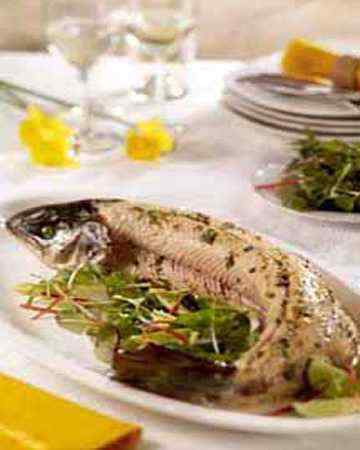 Salmon is the common name for fish in the order Salmoniformes. They live in the northern Atlantic and Pacific oceans, and are anadromous, which means most types of salmon are born in fresh water, migrate to the sea, and return to freshwater to reproduce, or "spawn." Salmon appearance varies greatly from species to species. Species like chum salmon are silvery-blue in color while some have black spots on their sides, like the Atlantic salmon. Still others, like the cherry salmon, have bright red stripes. Most of these species maintain one color when living in fresh water, then change color when they are in salt water.
Pacific salmon are distantly related to Atlantic salmon but they can not inter-breed as these species have different numbers of chromosomes. Pink salmon are the smallest and most abundant species and Chinook salmon are the largest (exceeding 50 kilos) but least abundant species. Interestingly, they have exactly the same number of scales.
Rich in heart-healthy omega-3s, salmon is a low-calorie protein source that's also low in saturated fat.