Malanga
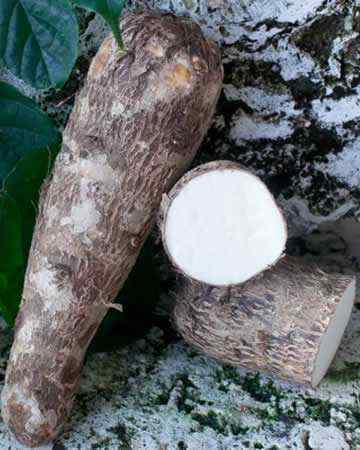 Malanga is a root vegetable that’s commonly used in South America, Africa, and some tropical regions. It has a texture similar to potatoes and is often milled into flour that can be used for cooking. Unlike potatoes, however, malanga is not from the nightshade family, which is a group of foods some people have to avoid for medical reasons. Malanga is a higher-fiber, more nutrient-dense option than a potato. Malanga is also similar to taro, another root vegetable. Despite the fact that some stores sell them under the other’s name, the two are not the same They are from the same family (Arceae), but they belong to different genus groups. Malanga has a hairy texture to its skin and has the shape of a longer, thinner potato. Taro has a lighter skin than malanga and is more bulb-shaped.
Nutrition: Malanga contains a number of different B vitamins, including riboflavin and folate. Riboflavin, also known as vitamin B-2, can improve energy levels, boost immune function, and improve the health of your skin, hair, and nails. Riboflavin may also protect against migraines and cancer, according to the National Institutes of Health. Folate helps the body convert carbohydrates into energy, and can help protect the heart, hearing, and eyes.