Potatoes
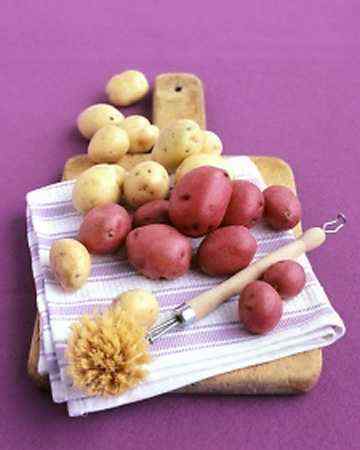 Potatoes come in a variety of sizes, colors, and textures; there are several hundred cultivars commercially available in North America. Potatoes can be divided into two main categories — starchy and waxy. Starchy potatoes, such as russets, are fluffy and floury when cooked. Waxy varieties, such as new potatoes and fingerlings, are low in starch, have a creamy texture, and hold their shape well when cooked.
Health Benefits: Potatoes are a very popular food source. Unfortunately, most people eat potatoes in the form of greasy French fries or potato chips, and even baked potatoes are typically loaded down with fats such as butter, sour cream, melted cheese and bacon bits. Such treatment can make even baked potatoes a potential contributor to a heart attack. But take away the extra fat and deep frying, and a baked potato is an exceptionally healthful low calorie, high fiber food that offers significant protection against cardiovascular disease and cancer. Potatoes as a very good source of vitamin B6 and a good source of potassium, copper, vitamin C, manganese, phosphorus, niacin, dietary fiber, and pantothenic acid.
Potatoes also contain a variety of phytonutrients that have antioxidant activity. Among these important health-promoting compounds are carotenoids, flavonoids, and caffeic acid, as well as unique tuber storage proteins, such as patatin, which exhibit activity against free radicals. Followers of low-carb diets give regular potatoes a bad rap. They are not exactly good for you when dropped into a deep fryer, but potatoes are packed with powerful nutrients and antioxidants—compounds that fight free radicals. The ORAC value (a measure of the total antioxidants in 100 grams) for a medium baked potato with skin is a healthy 1,680, while that of a baked sweet potato with skin is 766. Compare those with the values for carrots, either cooked (317) or raw (666).
In Season: Potatoes (except for new potatoes) are available year-round.
What to Look For: Look for potatoes that are firm and free of cracks and bruises. Avoid potatoes that have sprouted "eyes" or have green-tinged skin — both signs of improper storage.
How to Store: Store potatoes in a cool, dark place (not the refrigerator). Waxy potatoes are best used within a week, while starchy varieties keep for several months.